| 🥩 Food Type | Dry Food |
| 📅 Life Stage | All Life Stages |
| 💪 Health Needs | Weight Management|Digestive Health|Skin & Coat |
| 🏷️ Brand | Canidae |
| ⭐ Our Rating | 4.0 / 5 |
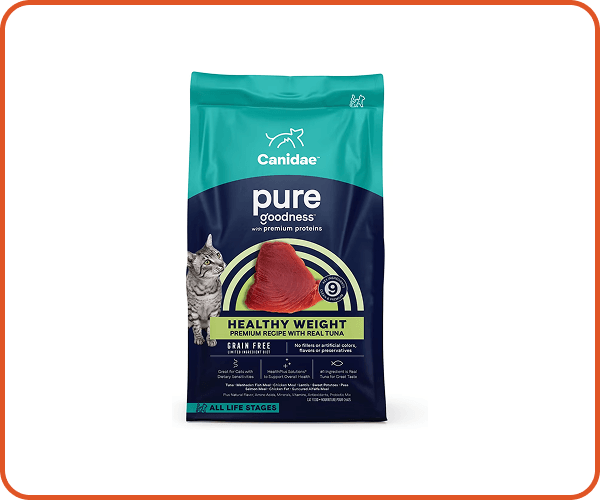
A "Healthy Weight" label on a bag that delivers 413 kcal per cup invites some scrutiny. This CANIDAE Pure Goodness Healthy Weight Real Tuna review examines exactly how the formula earns that positioning, where its limited-ingredient structure genuinely helps sensitive cats, and why a meaningful share of cats walk away from the bowl entirely.
CANIDAE was founded in 1996 by Scott Whipple and John Gordon, who started the brand after meeting at an independent pet supply store. The company built its reputation on natural, minimally processed ingredients, eventually opening its own manufacturing facility in Brownwood, Texas (Ethos Pet Nutrition) in 2012 to maintain tighter quality control over small-batch production. As of 2026, CANIDAE operates under the Natural Balance Pet Foods family following a private-equity-backed acquisition, though it continues to run under its own brand identity, product lines, and formulations.
The Pure line sits at the top of CANIDAE's cat portfolio. It's built around limited-ingredient formulations with short, recognizable ingredient lists. The Healthy Weight recipe with tuna is one of four dry options in that line, and it carries AAFCO approval for All Life Stages rather than adult maintenance alone. That distinction matters for how the formula is built and who it's actually designed for.
If you come across older listings or bags labeled "CANIDAE Grain Free PURE Ocean Indoor with Fresh Tuna" showing 8 key ingredients, that is the same product under its previous name. CANIDAE rebranded the entire Pure line, and the formula now appears as "Pure Goodness Healthy Weight Premium Recipe with Real Tuna" in updated teal and navy packaging. The key ingredient count was revised from 8 to 9 in the new branding. CANIDAE confirms the transition with an explicit "New Look, Same Great Quality" notice, and buyers may still receive old or new packaging depending on retailer stock rotation. The formula, guaranteed analysis, and nutritional profile are unchanged.
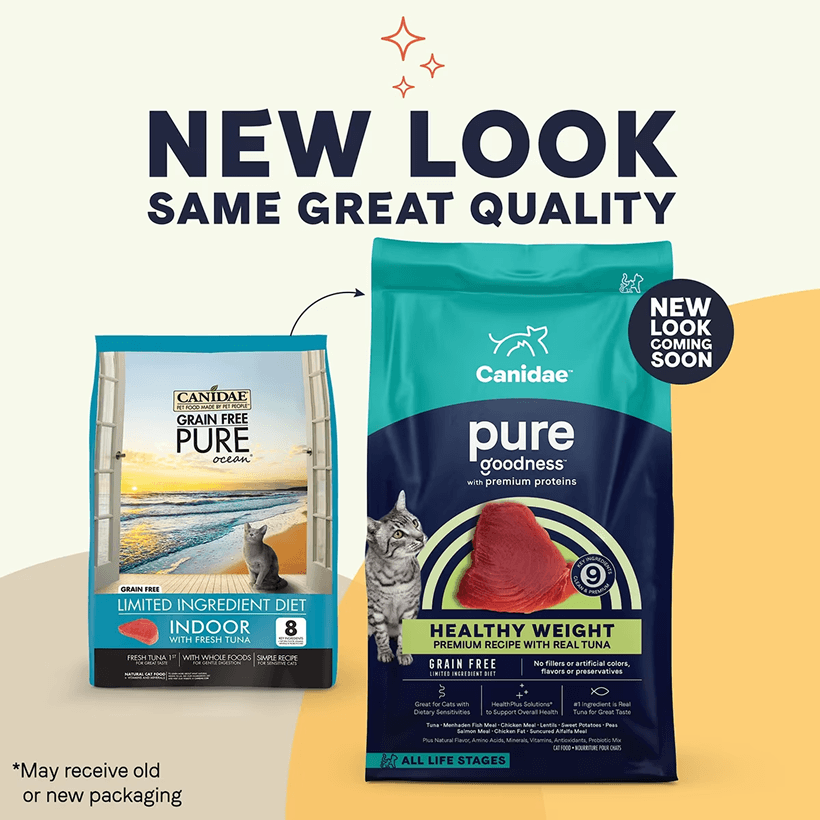
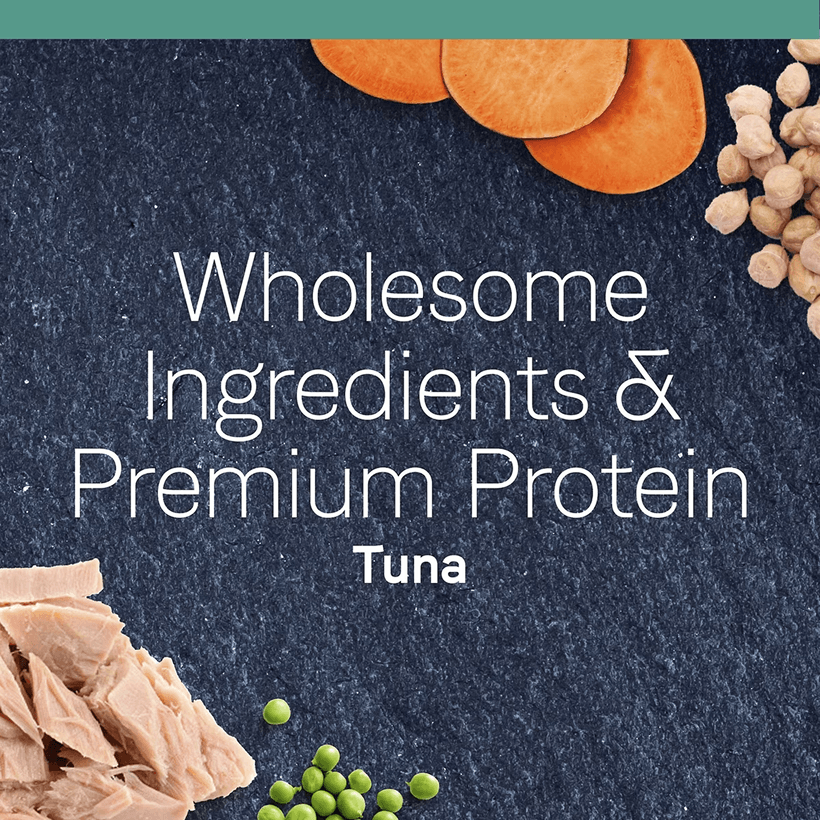
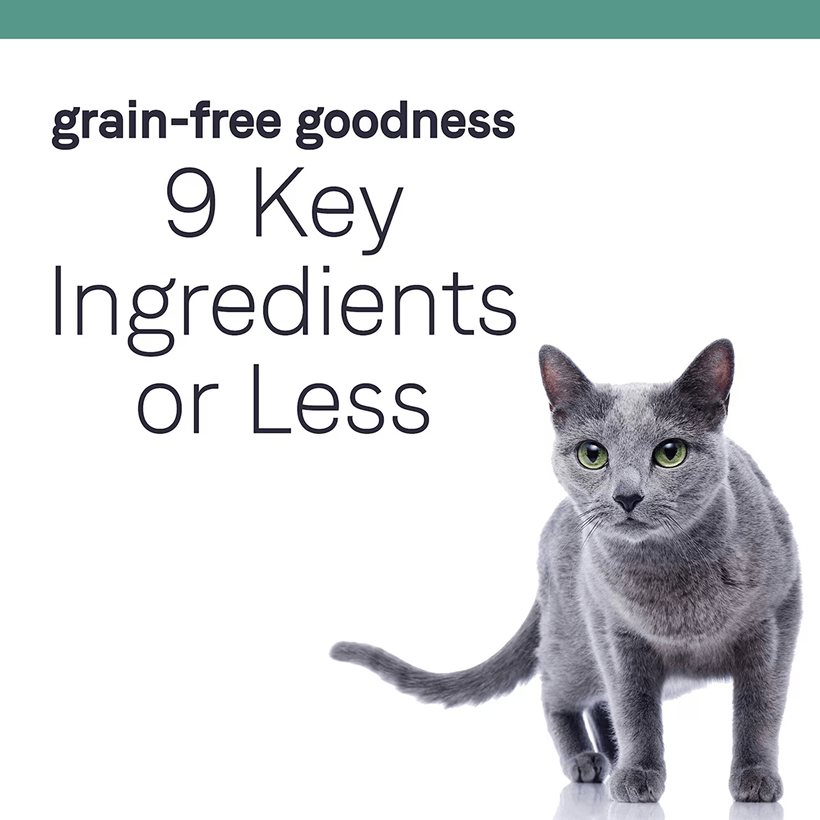
The bag advertises "9 Key Ingredients, Clean and Premium," and the label largely supports that claim. The opening is strong: Tuna first, Menhaden Fish Meal second, Chicken Meal third. Three named protein sources in the top three positions, two of them fish-derived. Menhaden is a fatty, omega-rich Atlantic fish used in pet food specifically for its high EPA and DHA content. Combined with Tuna and Salmon Meal further down the list, this formula delivers one of the more complete marine protein profiles available in grain-free dry cat food.
Lentils appear fourth and Peas appear sixth. Both are legumes used as grain-free carbohydrate and fiber sources. Their presence puts this formula squarely in the group of grain-free foods that have been part of the FDA's 2018 inquiry into a potential link between legume-heavy diets and dilated cardiomyopathy in cats. The FDA established no causal relationship and has issued no substantive public updates since 2022, but owners who prefer to minimize legume exposure in their cat's diet should note both appear in this formula.
Sweet Potatoes in fifth position provide a lower-glycemic carbohydrate alternative that complements the legumes without adding further DCM-adjacent ingredients. Salmon Meal in seventh adds a fourth protein source and further omega-3 fatty acid contribution. Chicken Fat, preserved with Mixed Tocopherols (vitamin E), provides the primary fat without synthetic preservatives. Suncured Alfalfa Meal closes the nine key ingredients, contributing natural fiber and chlorophyll.
One ingredient deeper in the list warrants attention: Menadione Sodium Bisulfite Complex, a synthetic form of Vitamin K3. AAFCO permits it in pet food, and the amounts present are within regulatory limits. Some premium formulas have replaced it with natural phylloquinone (Vitamin K1), citing concerns about oxidative stress at high doses in published animal studies. The doses in kibble are well below those levels, but it's one ingredient that separates this formula from cleaner-label competitors in its tier.
There is also an important cross-contamination disclosure on the label: the product is made on shared equipment in a facility that handles chicken, soy, and wheat. For cats with severe single-protein allergies, that caveat limits how confidently this formula can be used as a true elimination diet.
All figures confirmed from the product label:
With moisture at 9% maximum, dry matter is 91% of the food as fed. Converting to dry matter basis (DMB):
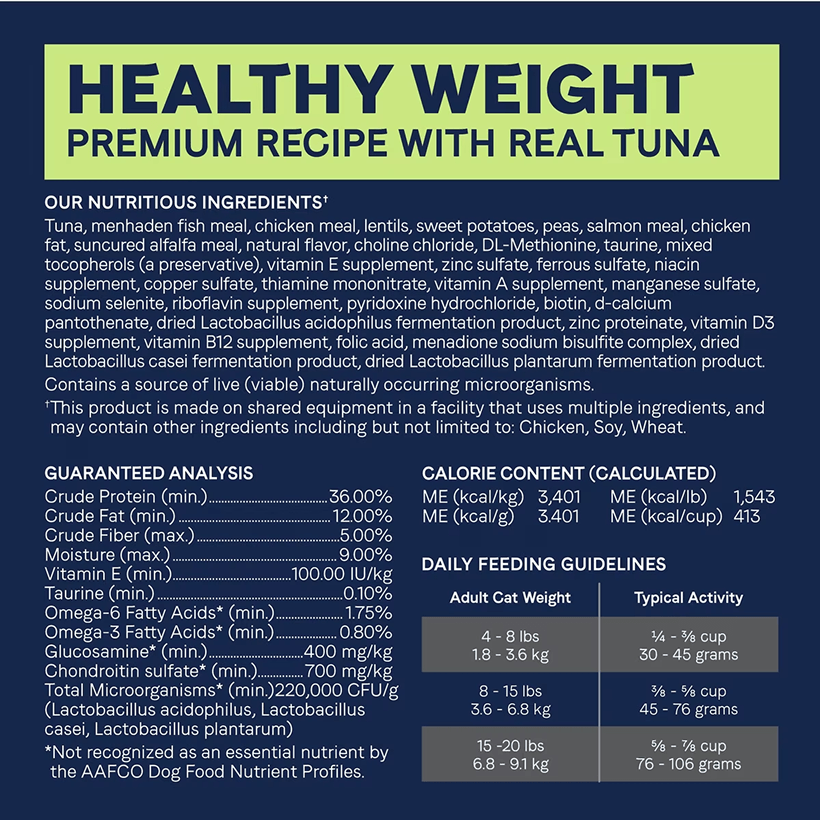
The 39.6% DMB protein is one of the higher figures among grain-free weight-oriented cat foods. AAFCO's adult cat maintenance minimum is 26% DMB. The All Life Stages certification requires meeting the higher kitten profile, which drives the protein level upward relative to adult-only formulas. The fat at 13.2% DMB is restrained by grain-free dry cat food standards. These two figures together, high protein and moderate fat, form the actual nutritional basis for the "Healthy Weight" claim. The caloric management doesn't come from reducing portion-size calories (413 kcal/cup is not low) but from the macronutrient composition encouraging lean mass over fat accumulation in cats with appropriate activity levels.
This is the most relevant number for owners buying this formula specifically for an overweight cat. At 413 kcal per cup, this food is not a low-calorie formula. By comparison, dedicated indoor or weight-control dry cat foods typically land between 330 and 380 kcal/cup. A 10-lb cat eating 1/2 cup per day of this formula takes in approximately 206 kcal, which is reasonable for weight management at that size, but it requires strict adherence to measured portions rather than free feeding. Owners who have previously free-fed their cat on a lower-calorie kibble and switch here without measuring will see weight gain, not loss.
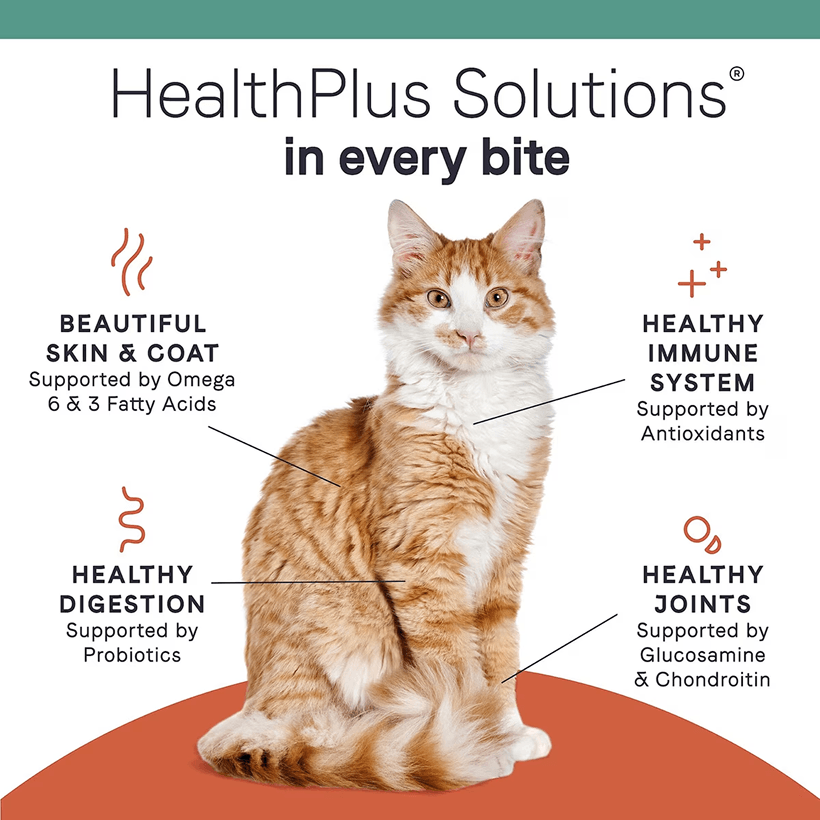
The guaranteed analysis includes glucosamine at 400 mg/kg and chondroitin sulfate at 700 mg/kg. These are joint support compounds rarely found in weight control formulas outside of prescription diets. Their presence makes this formula more relevant than average for overweight cats who already show early signs of reduced mobility or stiffness, where excess body weight and joint stress compound each other. It's a meaningful addition for a multi-life-stage formula that expects to be fed across a cat's full adult lifespan.
At approximately $3.33 per pound (the 5-lb bag runs roughly $16–17 at major retailers), the 5-lb bag contains approximately 7,720 kcal (2.27 kg × 3,401 kcal/kg). That places this formula at approximately $2.15–$2.20 per 1,000 kcal. For a 10-lb cat eating 1/2 cup per day (206 kcal), monthly caloric need is approximately 6,180 kcal, which translates to roughly $13–$14 per month. That's a competitive price for a limited-ingredient grain-free formula, sitting meaningfully below ACANA and Orijen territory while remaining above mainstream grocery brands.
| Formula | DMB Protein | kcal/cup | Price per 1,000 kcal (est.) | KibbleWise Rating |
|---|---|---|---|---|
| CANIDAE Pure Goodness Healthy Weight Real Tuna | ~39.6% | 413 | ~$2.15–$2.20 | 4.0 |
| Merrick Purrfect Bistro Complete Care Weight Control | ~36% | 348 | ~$2.80–$3.20 | 4.2 |
| Nutro Wholesome Essentials Indoor Chicken & Brown Rice | ~36.7% | 369 | ~$1.45–$1.67 | 4.0 |
CANIDAE leads on DMB protein by a notable margin and is the only fish-first formula in this group. Merrick wins on calorie control (348 vs. 413 kcal/cup), which matters more for cats that need genuine caloric restriction. Nutro offers the most affordable option for owners where budget is the primary constraint.
CANIDAE has had limited recall activity in its history. The brand issued a voluntary recall in 2012 involving certain dog food formulas due to elevated vitamin D levels. No cat food products from CANIDAE have been subject to an FDA recall. ConsumerAffairs reviews from 2021 document quality complaints about dog food batches containing excessive ground material, which CANIDAE attributed to a manufacturing issue. These were consumer complaints rather than formal regulatory actions and did not involve cat food lines. The current Ethos Pet Nutrition facility in Texas operates under third-party auditing.
Palatability is the most consistent theme in negative reviews of this specific formula, and it's worth addressing directly rather than burying it. PawDiet's aggregate review data notes that a significant share of cat owners report their cats walking away from or refusing to eat this tuna formula, even when hungry. Chewy reviewers describe cats eating it initially then losing interest within days. A multi-cat household reviewer on Cats.com with eight cats reported that none would approach the bowl, speculating the vitamin blend creates an unappealing smell. On the other side, owners of cats with chicken allergies consistently report strong acceptance, shiny coats, and resolution of digestive symptoms when switching to this tuna-based limited-ingredient formula. The palatability divide appears to correlate with whether a cat has prior tuna-flavor exposure and whether they're sensitive to the aromatic intensity of the vitamin-mineral blend. This formula is not a safe bet for a finicky cat with no established tuna preference.
CANIDAE Pure Goodness Healthy Weight Real Tuna is best suited to adult cats with confirmed or suspected chicken protein sensitivities who need a limited-ingredient, grain-free option with genuine fish-forward nutrition. It works for multi-life-stage households where one formula needs to cover kittens and adults. The glucosamine and chondroitin addition makes it relevant for older cats managing both weight and early joint changes. It is less suitable for cats that are actively obese and need strict caloric restriction (the 413 kcal/cup requires disciplined portion control), cats with severe soy, wheat, or chicken allergies where cross-contamination is a dealbreaker, and cats with no prior tuna exposure who tend toward selectivity.
Coat quality generates the most consistent praise among owners whose cats accept the formula. Fish-heavy protein profiles with high omega-3 content predictably support coat condition, and multiple reviewers confirm this in practice. Digestive response is generally positive for cats transitioning from chicken-based foods that caused loose stool or excessive shedding. Palatability is the defining variable. Some cats take to it immediately and maintain enthusiasm; others refuse after a few days or never engage at all. There is no clear profile predicting which outcome a given cat will have, beyond the general observation that prior tuna familiarity seems to help. Weight outcomes are rarely commented on directly, which likely reflects the formula's dependence on portion control rather than inherent caloric restriction doing visible work on its own.
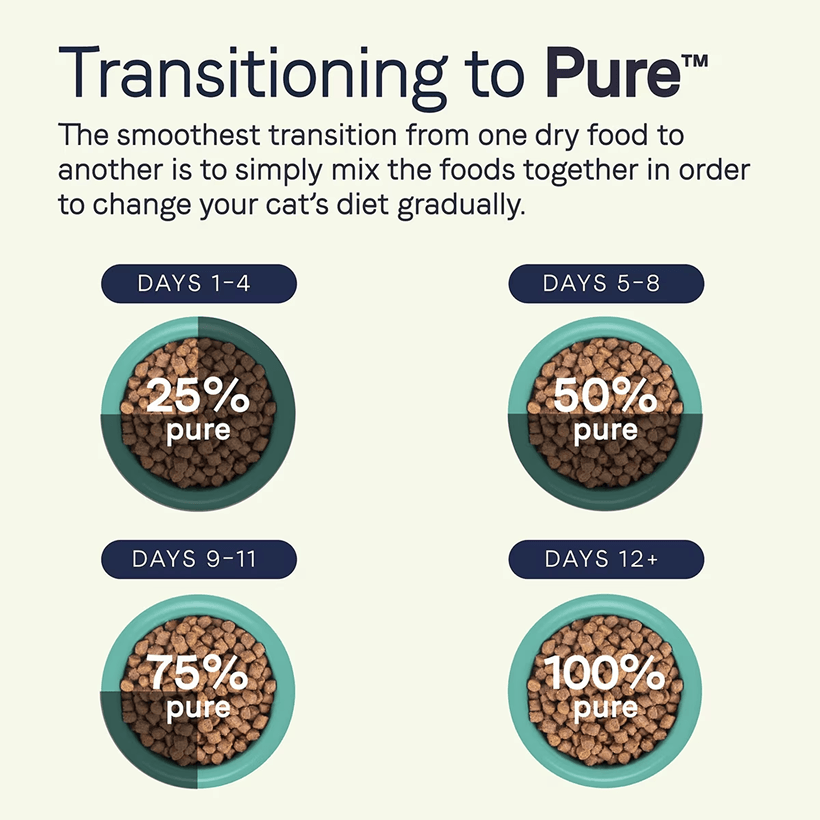
Based on an 8 oz. measuring cup. CANIDAE recommends a gradual 7 to 10 day transition: start with 25% new food mixed with 75% previous diet and increase daily until fully transitioned.
| Cat Weight | Daily Amount |
|---|---|
| 4–8 lbs (1.8–3.6 kg) | 1/4 – 3/8 cup (30–45 g) |
| 8–15 lbs (3.6–6.8 kg) | 3/8 – 5/8 cup (45–76 g) |
| 15–20 lbs (6.8–9.1 kg) | 5/8 – 7/8 cup (76–106 g) |
Keep fresh water available at all times. If feeding more than once per day, divide the daily amount by the number of meals. The feeding guidelines are a starting point; adjust based on the individual cat's body condition over 4 to 6 weeks.
CANIDAE Pure Goodness Healthy Weight Real Tuna is a nutritionally serious limited-ingredient formula with a genuinely strong protein profile and some thoughtful additions like glucosamine, chondroitin, and three probiotic strains. The fish-first construction makes it one of the more appropriate grain-free options for chicken-sensitive cats. It earns its positioning at the upper end of the mid-premium segment on ingredient quality alone. The honest caveats are the 413 kcal/cup figure that demands measured portions for actual weight management, the legume presence that keeps it inside the FDA's 2018 inquiry parameters, and a palatability record that is polarizing enough to make a trial purchase advisable before committing to bulk bags.
This review is for informational purposes only and is not veterinary advice. Every pet is different — always consult your veterinarian before changing your pet's diet, especially for pets with health conditions.
Ready to try Canidae?
Check Best Price →Some links on this page are affiliate links. We may earn a small commission at no extra cost to you.
The "Healthy Weight" positioning is based on macronutrient composition rather than caloric restriction. High protein (39.6% DMB) and moderate fat (13.2% DMB) support lean muscle mass over fat accumulation. The formula still requires strict portion control to produce weight loss results.
CANIDAE states it uses wild-caught tuna when supply permits, switching to farm-raised when wild supply is unavailable. This sourcing is not guaranteed to be consistent from batch to batch.
Yes. All Life Stages certification means the formula meets the higher nutritional standards required for growth and reproduction, making it appropriate for kittens, pregnant cats, and adults on the same feeding plan.
The formula uses nine key ingredients and avoids corn, wheat, and soy protein. However, the product label discloses shared equipment cross-contamination risk from chicken, soy, and wheat, which limits its use for cats with severe single-ingredient allergies.
Multiple owner reviews suggest the vitamin-mineral blend creates an aroma that some cats find unappealing, particularly those with no prior tuna food experience. Cats with an established preference for fish-based foods tend to accept it more readily.