| 🥩 Food Type | Dry Food |
| 📅 Life Stage | Adult |
| 💪 Health Needs | Joint Support|Skin & Coat|Digestive Health|Allergies |
| 📏 Breed Size | Small Breed|Medium Breed|Large Breed |
| 🏷️ Brand | Wellness |
| ⭐ Our Rating | 4.7 / 5 |
The glucosamine and chondroitin figures on the Wellness CORE Original guaranteed analysis stopped me: 1,200 mg/kg for both. That is higher than Farmina N&D Prime's 1,000 mg/kg, higher than Victor Hero Canine's 800 mg/kg, higher than Nutro Ultra's unlisted level, and higher than every formula reviewed on this site. For a mainstream grain-free adult dog food that is not marketed primarily as a joint formula, those figures are a meaningful differentiator — and they are just the start of what makes Wellness CORE Original Grain-Free Deboned Turkey, Turkey Meal & Chicken Meal worth examining closely. This Wellness CORE Original Grain-Free Turkey & Chicken review works through the complete ingredient and nutritional picture honestly, including the legume carbohydrate profile that no grain-free formula can currently escape without accountability.
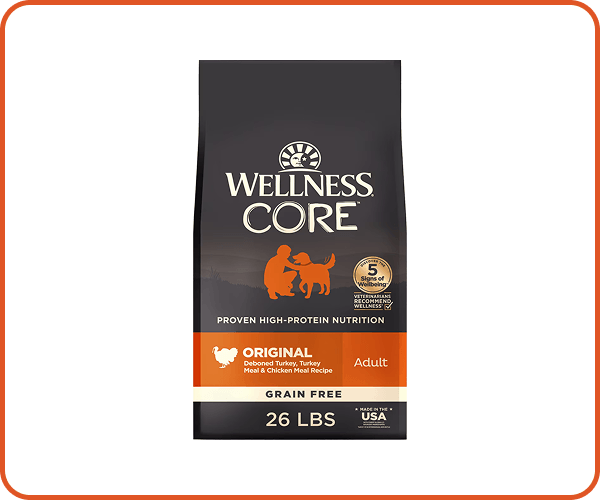
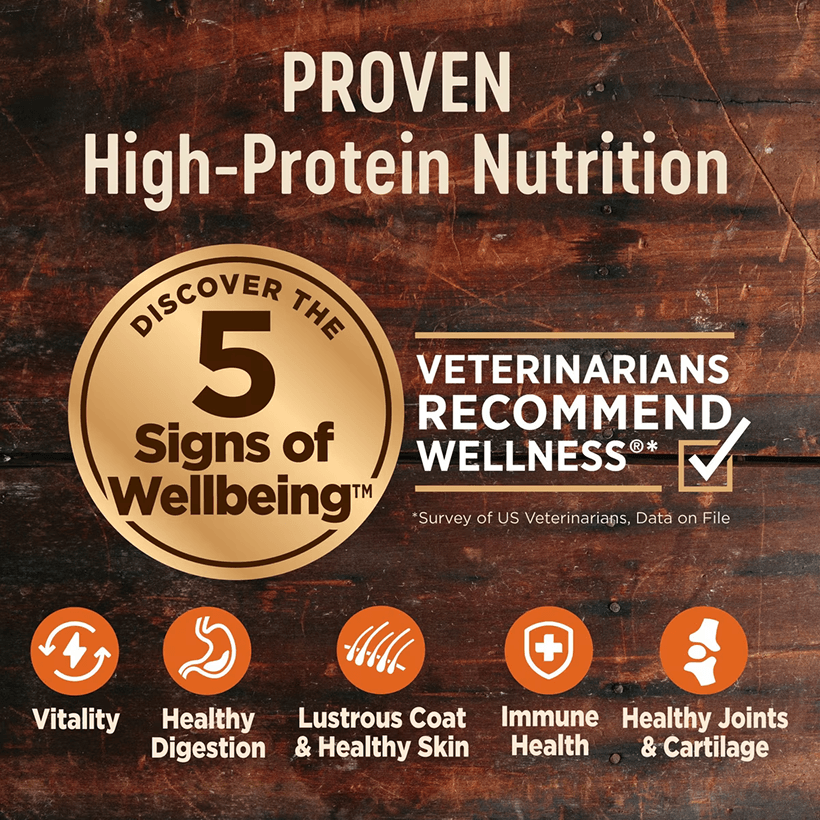
Wellness CORE Original is currently transitioning to a refreshed packaging design — the new look features a lighter, warmer color palette with the familiar CORE branding and the same "5 Signs of Wellbeing" and "Veterinarians Recommend Wellness" credentials prominently displayed. The formula, ingredient list, and guaranteed analysis remain identical across both packaging versions, so owners receiving either the old or new bag are getting the same food. If your bag looks different from the product images on this page, the updated packaging is the reason — not a formula change.

Wellness CORE is produced by WellPet LLC — the same parent company as the Wellness Complete Health line reviewed separately — and represents the brand's premium, high-protein grain-free tier. Where Wellness Complete Health uses a grain-inclusive, moderate-protein approach optimized for sensitive dogs, CORE is built around the raw feeding philosophy: dogs thrive on a diet primarily comprised of meat, and the carbohydrate load of grain-heavy formulas compromises that natural nutritional alignment. Every CORE formula is grain-free, by-product-free, and free of corn, wheat, soy, artificial colors, flavors, and preservatives — brand commitments applied uniformly rather than selectively. The Original Formula is the flagship recipe in the adult CORE lineup, using deboned turkey, turkey meal, and chicken meal as the triple protein foundation alongside a proprietary blend of botanicals, superfoods, and functional supplements. It targets the brand's "5 Signs of Wellbeing" framework: sustained energy, healthy digestion, healthy skin and coat, immune health, and healthy teeth and bones. It is formulated for adult dogs only — Wellness specifically notes it is not appropriate for puppies or pregnant and nursing females, who require the CORE Puppy formula. AAFCO substantiation covers adult maintenance only. All protein ingredients are sourced from suppliers who are free of growth hormones and antibiotics and compliant with environmental and welfare standards.
The complete ingredient list, sourced from the official Wellness website and confirmed across Chewy and PetSmart, reads as follows: Deboned Turkey, Turkey Meal, Chicken Meal (Source of Glucosamine and Chondroitin Sulfate), Dried Ground Potatoes, Lentils, Peas, Chicken Fat (Preserved with Mixed Tocopherols), Dried Plain Beet Pulp, Flaxseed, Natural Flavor, Dried Chicory Root, Salmon Oil, Taurine, Vitamin E Supplement, Choline Chloride, Spinach, Broccoli, Carrots, Parsley, Apples, Blueberries, Kale, Mixed Tocopherols (Preserve Freshness), Niacin, Zinc Proteinate, Ferrous Sulfate, Zinc Sulfate, Iron Proteinate, Vitamin A Supplement, Thiamine Mononitrate, d-Calcium Pantothenate, Sodium Selenite, Pyridoxine Hydrochloride, Copper Sulfate, Manganese Sulfate, Riboflavin, Manganese Proteinate, Copper Proteinate, Biotin, Vitamin D3 Supplement, Yucca Schidigera Extract, Vitamin B12 Supplement, Folic Acid, Calcium Iodate, Ascorbic Acid (Vitamin C), Dried Enterococcus faecium Fermentation Product, Dried Bacillus licheniformis Fermentation Product, Dried Bacillus subtilis Fermentation Product, Rosemary Extract, Green Tea Extract, Spearmint Extract.
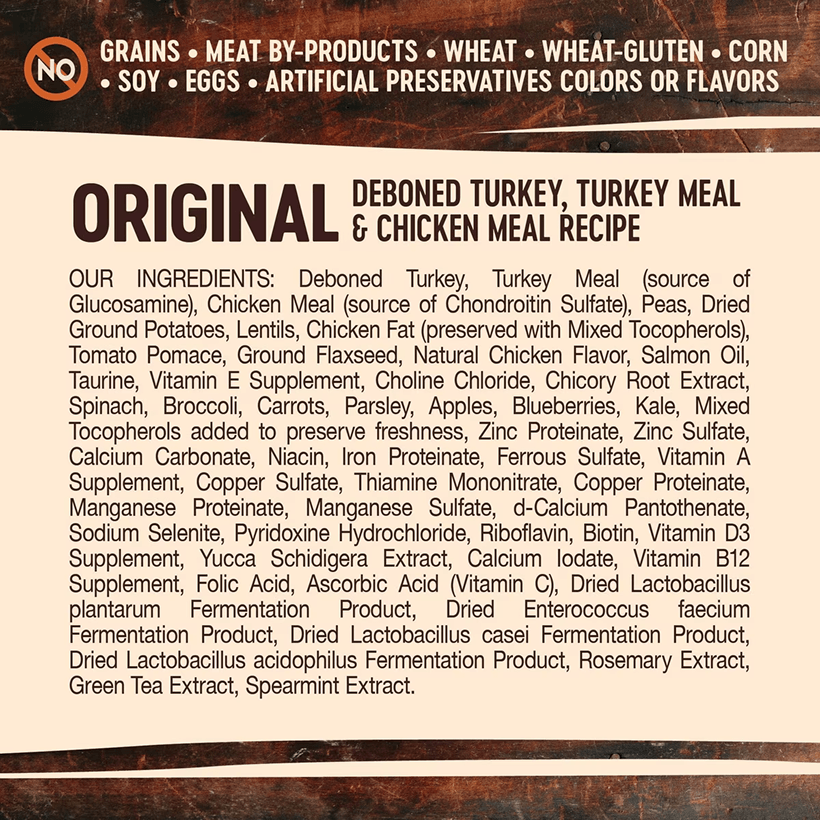
Deboned turkey opens the list — named, whole muscle meat establishing the formula's primary protein identity. Its moisture contribution means that after processing the effective dry-weight fraction is smaller than first position implies, but it establishes the protein species and quality signal clearly. Turkey meal in second is the formula's most important protein contributor by dry weight: pre-dried and concentrated, it delivers a dense amino acid block regardless of positional ranking. Chicken meal in third carries the parenthetical designation as the natural source of glucosamine and chondroitin sulfate — the structural proteins from connective tissue and cartilage that yield the formula's exceptional joint compound figures. The triple named protein opening — deboned turkey, turkey meal, chicken meal — is the strongest animal protein foundation in the first three positions of any standard-tier adult dog formula reviewed here.
Dried ground potatoes in fourth are the formula's primary grain-free carbohydrate — a root vegetable that falls entirely outside the legume family implicated in the FDA's DCM investigation, providing complex carbohydrates, potassium, and Vitamin C without the plant protein inflation that peas and lentils add. Lentils in fifth and peas in sixth are the legume-derived carbohydrate contributors — present and functional, carrying the same DCM-context awareness that applies to every grain-free formula with legume bulk ingredients. The meaningful difference from more legume-heavy formulas is that dried ground potatoes precede both legumes in the list, suggesting a more balanced grain-free carbohydrate architecture where potato starch dominates over legume starch. Owners of DCM-predisposed breeds — Dobermans, Boxers, Golden Retrievers, Irish Wolfhounds — should discuss the legume presence with their veterinarian regardless of the potato-first positioning. Chicken fat preserved with mixed tocopherols provides quality omega-6 fatty acids with natural preservation. Dried plain beet pulp provides prebiotic fiber for digestive health and stool quality. Flaxseed delivers ALA omega-3 fatty acids. Dried chicory root provides inulin prebiotic for microbiome support. Salmon oil adds concentrated EPA and DHA omega-3 fatty acids from a marine source.
The superfood botanical complex — spinach, broccoli, carrots, parsley, apples, blueberries, and kale — provides a genuine seven-ingredient whole food antioxidant and phytonutrient array that is among the most comprehensive in any reviewed adult dog food. Taurine at 0.20% minimum is guaranteed — a proactive DCM-context supplement above AAFCO requirements. Yucca schidigera extract reduces intestinal ammonia for stool odor support. The three-strain probiotic system — Enterococcus faecium, Bacillus licheniformis, and Bacillus subtilis — is guaranteed at 80 million CFU per pound. Natural preservation uses mixed tocopherols, rosemary extract, green tea extract, and spearmint extract — no artificial preservatives anywhere.
All figures below are sourced directly from the product label and confirmed across Chewy and Pet Supermarket:
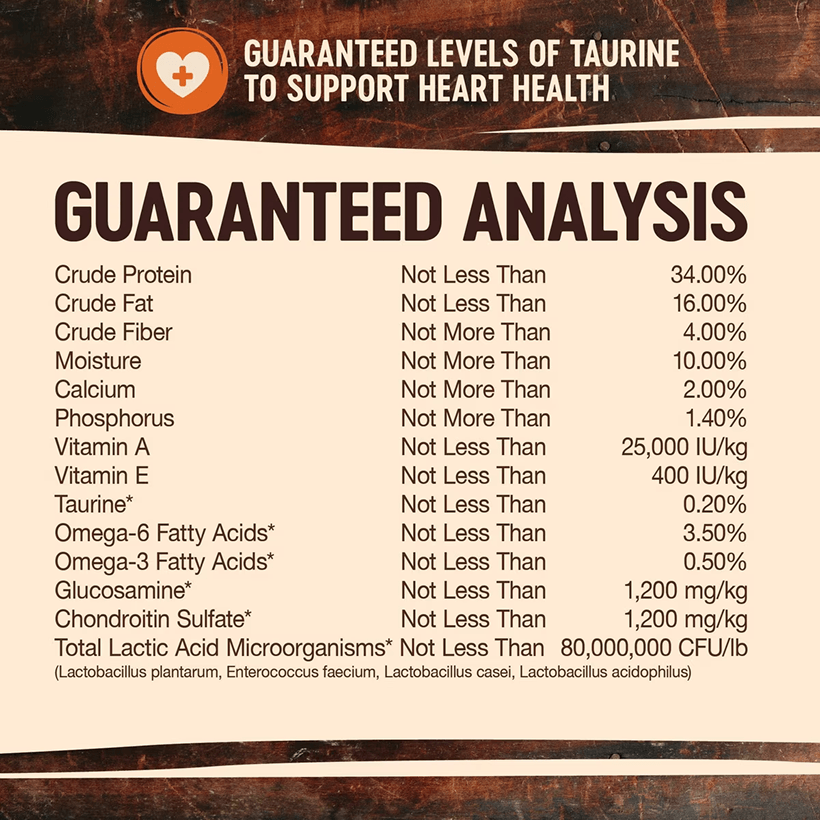
On a dry matter basis — removing the 10% moisture ceiling — protein reaches approximately 37.8%, fat approximately 17.8%, and estimated carbohydrates around 36%. The glucosamine at 1,200 mg/kg and chondroitin at 1,200 mg/kg are the highest in any reviewed retail dry dog food — surpassing even Farmina N&D Prime's 1,000/700 mg/kg pairing. The Vitamin E guarantee at 400 IU/kg is strong. The omega-6 at 3.5% and taurine at 0.20% are both meaningful guaranteed figures. At 409 kcal per cup, the caloric density is moderate-to-higher — requiring attentive portioning for less active dogs but appropriate for active adults.
The joint compound figures in this formula deserve specific discussion because they significantly exceed what is typically found in non-prescription dog food. Glucosamine at 1,200 mg/kg is the concentration at which veterinary nutritionists begin to describe meaningful joint cartilage support — not the token 250 mg/kg that many formulas include to justify a "supports joint health" claim. Chondroitin at 1,200 mg/kg is similarly at therapeutic-adjacent concentration. Wellness derives these figures naturally from chicken meal — the connective tissue, cartilage, and bone components of poultry processing that retain high concentrations of glycosaminoglycans. The parenthetical "(source of glucosamine and chondroitin sulfate)" in the ingredient list confirms this whole-food sourcing rather than isolated supplement addition. For active dogs, working breeds, or dogs in early aging where joint maintenance is becoming a proactive concern, these concentrations represent a meaningful built-in supplement that would otherwise require a separate daily joint chew at equivalent cost.
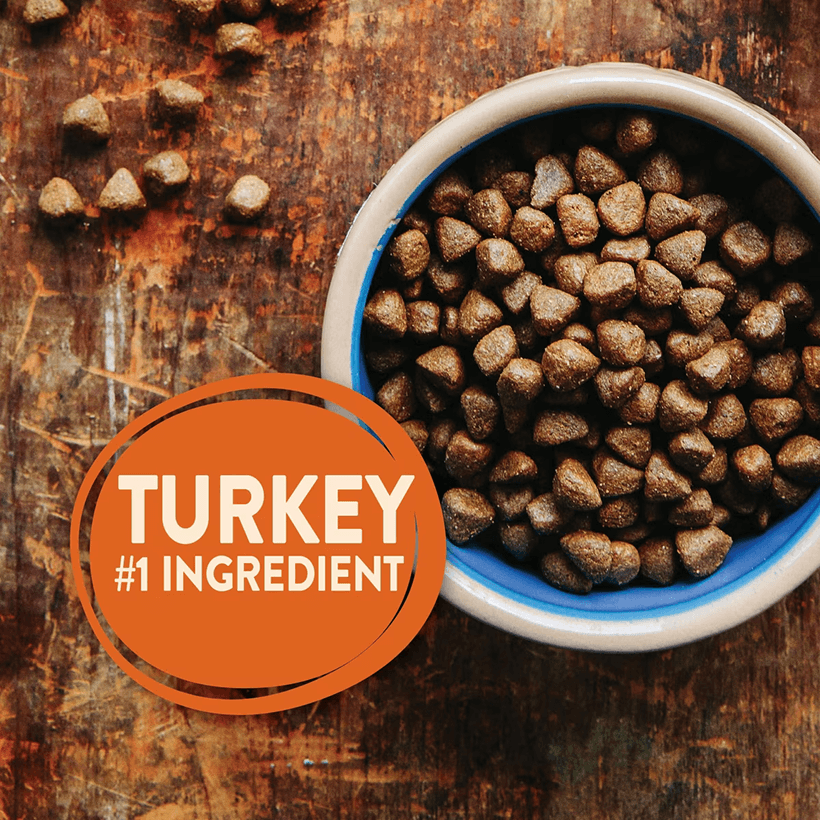
The kibble is medium-firm and uniformly shaped — sized appropriately for adult dogs across the weight range from small to large. The turkey-forward aroma combined with the salmon oil and chicken fat creates a palatability profile that owner feedback describes as reliably strong across breeds, including dogs that had been reluctant on other premium grain-free alternatives. A 30-day independent owner trial reviewed in 2026 described sustained energy improvements, coat quality transformation within weeks, and consistent palatability across three dogs of different breeds and sizes. The formula's palatability longevity — dogs maintaining enthusiasm across months and years of feeding — is a consistent theme in the long-term Chewy review record. A small minority of reviews describe dogs developing loose stools during the initial transition period, attributable to the higher fat and protein density relative to grain-inclusive formulas — consistent with the standard transition advice to move gradually over 5 to 7 days.
Wellness CORE Original is manufactured in the USA with protein ingredients sourced from suppliers meeting WellPet's no-growth-hormone and no-antibiotic standards. WellPet manufactures in its own facilities and conducts quality testing at ingredient intake and finished product stages. Wellness has maintained a clean recall record for the CORE adult dry dog food formula through early 2026 — no significant recalls have affected this product line. The brand backs every formula with WellPet's satisfaction guarantee.
Against Taste of the Wild High Prairie Bison & Venison — reviewed separately — the comparison highlights different multi-protein strategies. Taste of the Wild uses water buffalo, lamb meal, chicken meal, bison, and venison for broader species diversity; Wellness CORE concentrates on turkey and chicken. Taste of the Wild delivers 422 kcal/cup versus Wellness CORE's 409 kcal/cup, and both use peas prominently in the carbohydrate base. Wellness CORE wins decisively on glucosamine and chondroitin — its 1,200/1,200 mg/kg pairing versus Taste of the Wild's unlisted levels. Against Farmina N&D Prime Chicken & Pomegranate — also reviewed — Farmina wins on legume architecture: its whole-pea-free, lentil-free carbohydrate base is more DCM-aware. Wellness CORE counters with higher glucosamine (1,200 versus 1,000 mg/kg), a seven-ingredient superfood botanical array, and a meaningfully lower price per pound. For owners prioritizing the legume-free grain-free format, Farmina is the more appropriate choice. For owners prioritizing joint support at premium quality without Farmina's pricing, Wellness CORE is the stronger value.
Wellness CORE Original Grain-Free Turkey & Chicken is most appropriate for healthy adult dogs over 1 year of age of any size whose owners want premium grain-free nutrition with the highest available retail joint support figures, a triple named animal protein foundation, no by-products, and a comprehensive superfood and probiotic system. Active and working breeds specifically benefit from the protein density at 34% crude protein alongside the 1,200 mg/kg glucosamine for joint maintenance under physical demand. It is explicitly not appropriate for puppies or pregnant and nursing females — Wellness specifically notes this requires the CORE Puppy formula. Dogs whose owners have prioritized legume-free grain-free feeding for DCM-predisposed breeds should consider Farmina N&D Prime as the more thorough legume exclusion option. Dogs with confirmed turkey or chicken sensitivities cannot be accommodated — both species appear prominently.
Across Chewy and Petco, Wellness CORE Original Grain-Free holds ratings between 4.6 and 4.8 out of 5 stars from a very large verified purchase base. The dominant positive pattern involves three specific outcomes: visible coat quality transformation within weeks of transitioning — described repeatedly as the most dramatic improvement owners have seen from any formula change — sustained energy and activity levels in dogs that had been sluggish on grain-inclusive alternatives, and consistent stool quality improvement. Long-term loyalty of three to seven years appears regularly in the review record. Critical feedback concentrates on two areas: the price per pound at the premium tier, and the legume presence for DCM-aware owners who researched the ingredient list after purchase.
Wellness recommends a 5 to 7 day gradual transition — and specifically warns that "CORE is highly palatable so your dog may tend to eat more of this food," recommending strict measuring rather than visual estimation. Daily feeding amounts from the official product label:
| Dog Weight (lbs) | Dog Weight (kg) | Cups Per Day | Grams Per Day |
|---|---|---|---|
| 6 – 20 | 2.7 – 9 | ½ – 1⅓ | 60 – 148 |
| 20 – 35 | 9 – 16 | 1⅓ – 2 | 148 – 225 |
| 35 – 50 | 16 – 23 | 2 – 2½ | 225 – 300 |
| 50 – 65 | 23 – 30 | 2⅔ – 3¼ | 300 – 360 |
| 65 – 80 | 30 – 36 | 3¼ – 3¾ | 360 – 418 |
| 80 – 95 | 36 – 43 | 3¾ – 4¼ | 418 – 480 |
| 95 – 115 | 43 – 52 | 4¼ – 5 | 480 – 550 |
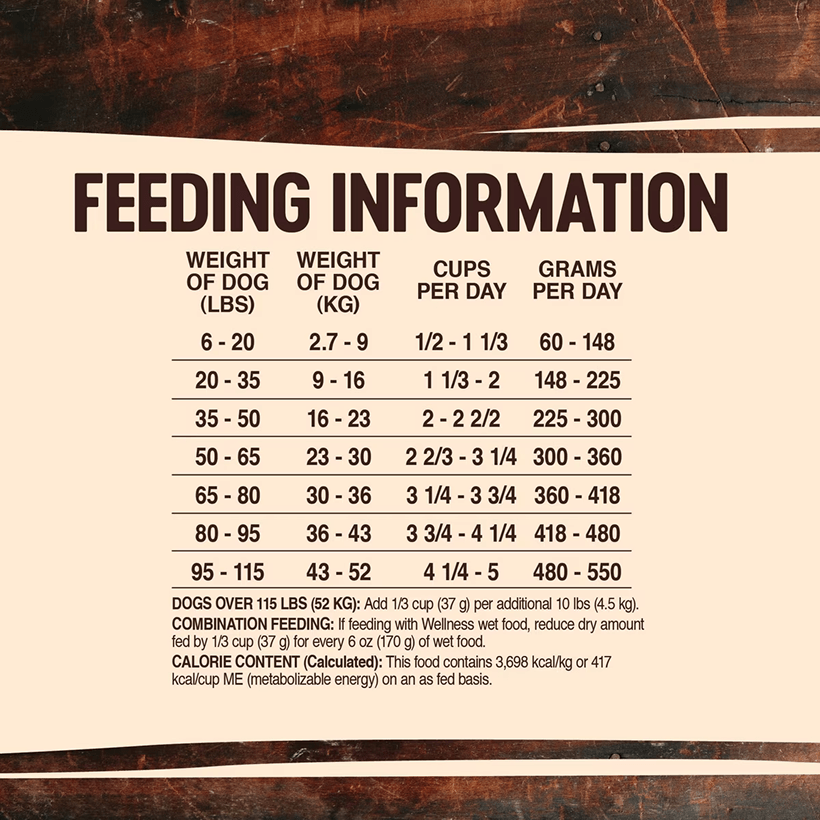
For dogs over 115 lbs, add ⅓ cup per additional 10 lbs. For combination feeding with Wellness wet food, reduce dry by ⅓ cup for every 6 oz of wet food. Divide daily portions across two meals. Fresh water should always be available. This formula is not appropriate for puppies or pregnant females — use Wellness CORE Puppy for those life stages.
Wellness CORE Original Grain-Free Turkey & Chicken delivers a premium adult dog food architecture that justifies its positioning through measurable, specific advantages: deboned turkey, turkey meal, and chicken meal in the first three positions, 1,200 mg/kg glucosamine and 1,200 mg/kg chondroitin — the highest reviewed — 34% crude protein with no by-products, Vitamin E at 400 IU/kg, taurine guaranteed at 0.20%, salmon oil EPA and DHA, a seven-ingredient superfood botanical complex, three-strain probiotics at 80 million CFU/lb, and complete exclusion of grain, by-products, corn, wheat, soy, and artificial additives. The honest limitations are real: lentils and peas in positions five and six carry DCM-context awareness, the formula is adult-only and requires a different product for puppies, and the price per pound is in the premium tier. For the active, healthy adult dog whose owner wants the most complete functional nutrition package in retail grain-free dry food — joint support, skin and coat, gut health, and immune function simultaneously — Wellness CORE Original is the strongest reviewed option at its price point.
Ready to try Wellness?
Check Best Price →Some links on this page are affiliate links. We may earn a small commission at no extra cost to you.
At 1,200 mg/kg each, the glucosamine and chondroitin figures come from chicken meal — naturally rich in cartilage, connective tissue, and bone components that retain high glycosaminoglycan concentrations. This is whole-food-sourced joint support rather than isolated supplement addition.
No — Wellness specifically states this formula is for adult, non-reproducing dogs over one year old. Puppies and pregnant or nursing females have special nutritional requirements and should use the Wellness CORE Puppy formula.
Yes — lentils appear in fifth position and peas in sixth. Owners of DCM-predisposed breeds should discuss this with their veterinarian. Dried ground potatoes in fourth position precede both legumes as the primary grain-free carbohydrate.
409 kcal per cup (3,682 kcal/kg ME). Wellness specifically notes the formula is highly palatable and warns owners to measure portions precisely rather than estimate visually, as dogs tend to eat more of this food.
Both are premium grain-free formulas with strong palatability records. Wellness CORE wins on glucosamine (1,200 mg/kg versus Taste of the Wild's unlisted level), superfood complexity, and taurine guarantee. Taste of the Wild offers a broader protein species diversity with bison, venison, and water buffalo alongside chicken, and a slightly higher caloric density at 422 kcal/cup.