| 🥩 Food Type | Dry Food |
| 📅 Life Stage | Adult |
| 💪 Health Needs | Digestive Health | Joint Support | Skin & Coat |
| 📏 Breed Size | Medium Breed |
| 🏷️ Brand | Royal Canin |
| ⭐ Our Rating | 4.6 / 5 |
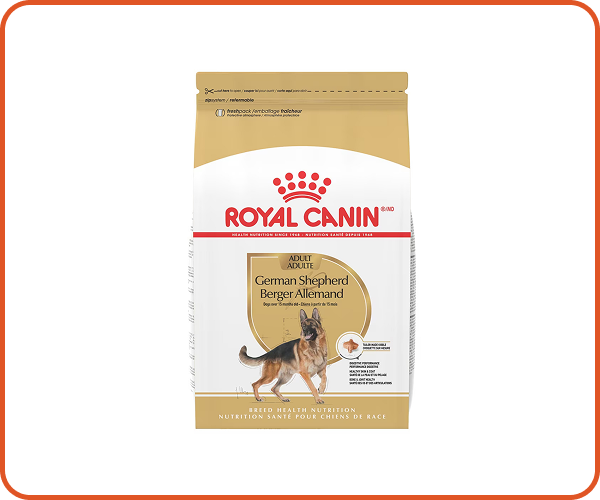
German Shepherds are one of the most nutritionally demanding breeds on the market — sensitive digestive systems, a thick double coat that requires specific fatty acid support, and joints that take a beating from an active, working lifestyle. Most large-breed formulas are not built with any of this in mind. Royal Canin Breed Health Nutrition German Shepherd Adult is one of the few that genuinely is — and this Royal Canin German Shepherd Adult review examines whether that breed-specific engineering justifies a price tag that sits firmly in the premium tier.
Jean Cathary, a French veterinarian, founded Royal Canin in 1968 on a principle that remains central to the brand today: nutrition precise enough to function like medicine. Now operating under Mars Petcare across more than 90 countries, Royal Canin has built one of the most extensive breed-specific product catalogs in the pet food industry. The German Shepherd Adult formula targets purebred German Shepherds aged 15 months and older — not as a marketing exercise, but as a genuinely differentiated formulation addressing four documented breed vulnerabilities: digestive sensitivity, skin and coat fragility, joint stress, and the specific biomechanics of the breed's long, strong muzzle. The kibble shape, size, and texture are all calibrated to that muzzle, designed to slow eating pace and encourage thorough chewing in a breed that has a documented tendency to inhale food.
Every ingredient listed below has been verified against the official Royal Canin US website and cross-checked on Petco, PetSmart, and Chewy: Brewers Rice, Chicken By-Product Meal, Brown Rice, Oat Groats, Chicken Fat, Pork Meal, Natural Flavors, Powdered Cellulose, Wheat Gluten, Dried Plain Beet Pulp, Fish Oil, Vegetable Oil, Sodium Silico Aluminate, Calcium Carbonate, Potassium Chloride, L-Tyrosine, Sodium Tripolyphosphate, Taurine, Hydrolyzed Yeast, Vitamins, Trace Minerals, Glucosamine Hydrochloride, Marigold Extract, Chondroitin Sulfate, among others.
Brewers rice in the lead position is the most frequently cited criticism of this formula. A by-product of the rice milling process, brewers rice is digestible and provides clean carbohydrate energy — but its prominence above any animal protein source on the ingredient list is a legitimate point of contention for owners who expect meat to top the ranking. Royal Canin's counterargument is that this formula is built around digestibility engineering rather than ingredient optics, and brewers rice serves that function well. The second ingredient, chicken by-product meal, is a rendered, concentrated protein source derived from chicken organs and structural parts. It delivers a strong amino acid profile and significant micronutrient density — most veterinary nutritionists accept it as a sound ingredient — but it lacks the compositional transparency of whole chicken or a named chicken meal.
Brown rice and oat groats add whole grain carbohydrate diversity alongside fiber that supports gradual energy release. Chicken fat, preserved naturally with mixed tocopherols, is a well-regarded fat source that contributes essential fatty acids and palatability. Pork meal broadens the amino acid profile by introducing a second named animal protein. The ingredient that most distinguishes this formula from generic large-breed options is fish oil — the direct source of EPA and DHA omega-3 fatty acids that are critical for the German Shepherd's skin barrier and dense double coat. Powdered cellulose and dried beet pulp form the fiber system specifically calibrated to slow colonic transit and reduce fermentation — a clinically meaningful feature for a breed with documented intestinal permeability issues. Wheat gluten functions as a plant-based protein supplement with high digestibility, though owners of gluten-sensitive dogs should flag its presence. Closing out the functional highlights are glucosamine hydrochloride and chondroitin sulfate, added specifically to support the joint integrity of a large, athletically demanding breed.
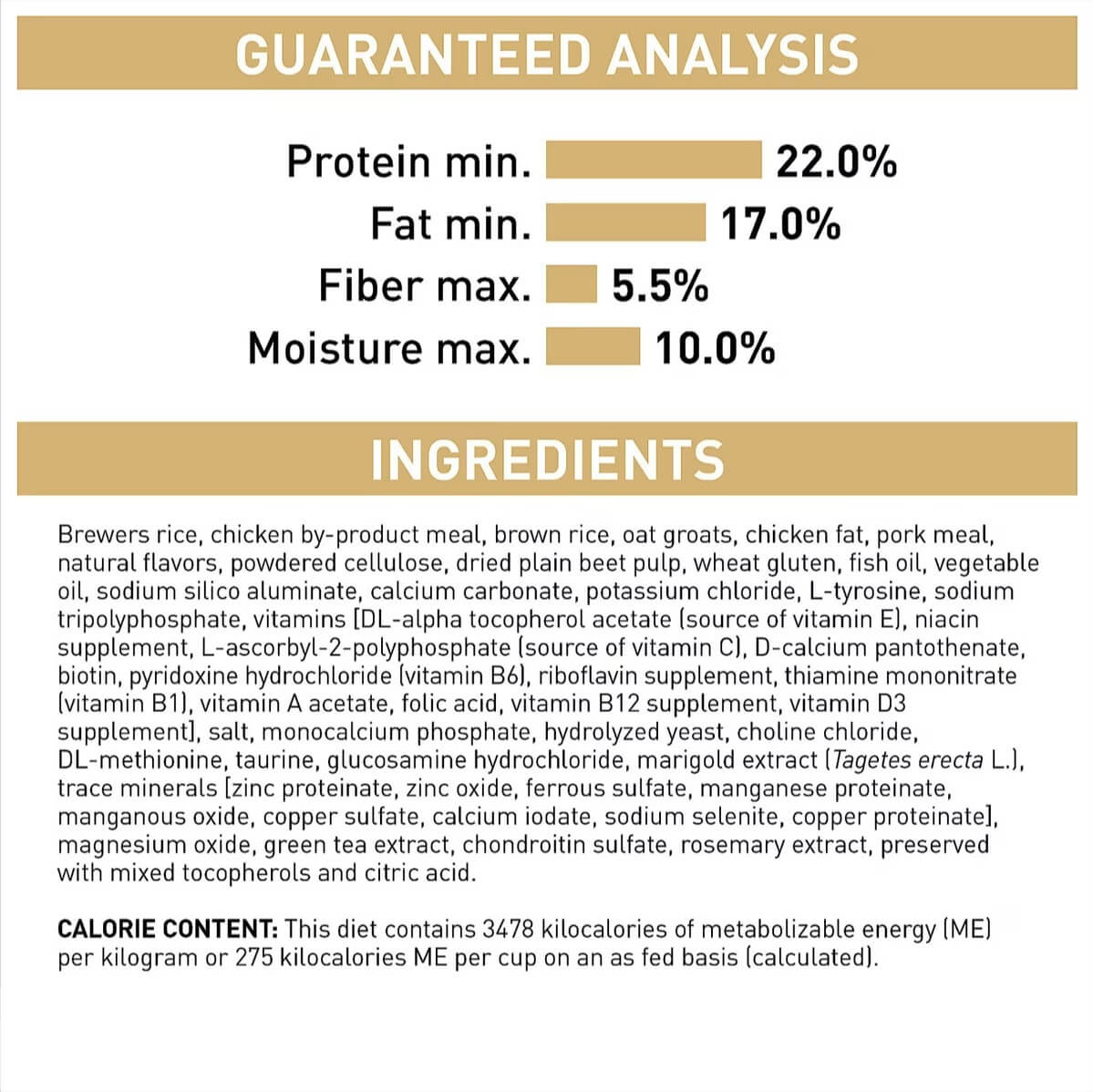
All figures below are sourced directly from the Royal Canin US official website, confirmed across PetSmart and Petco listings:
Removing moisture to calculate dry matter values shifts protein to approximately 24.4%, fat to 18.9%, and estimated carbohydrates to around 48%. The protein percentage is moderate by premium standards — a number that draws criticism until you understand that Royal Canin's protein selection is governed by digestibility rather than quantity. The fat content at nearly 19% DMB is notably elevated, supporting the energy requirements of an active working breed and the fatty acid demands of the coat and skin. At 321 kcal per cup, the caloric density is intentionally restrained — a practical advantage for managing weight in less active adult German Shepherds.
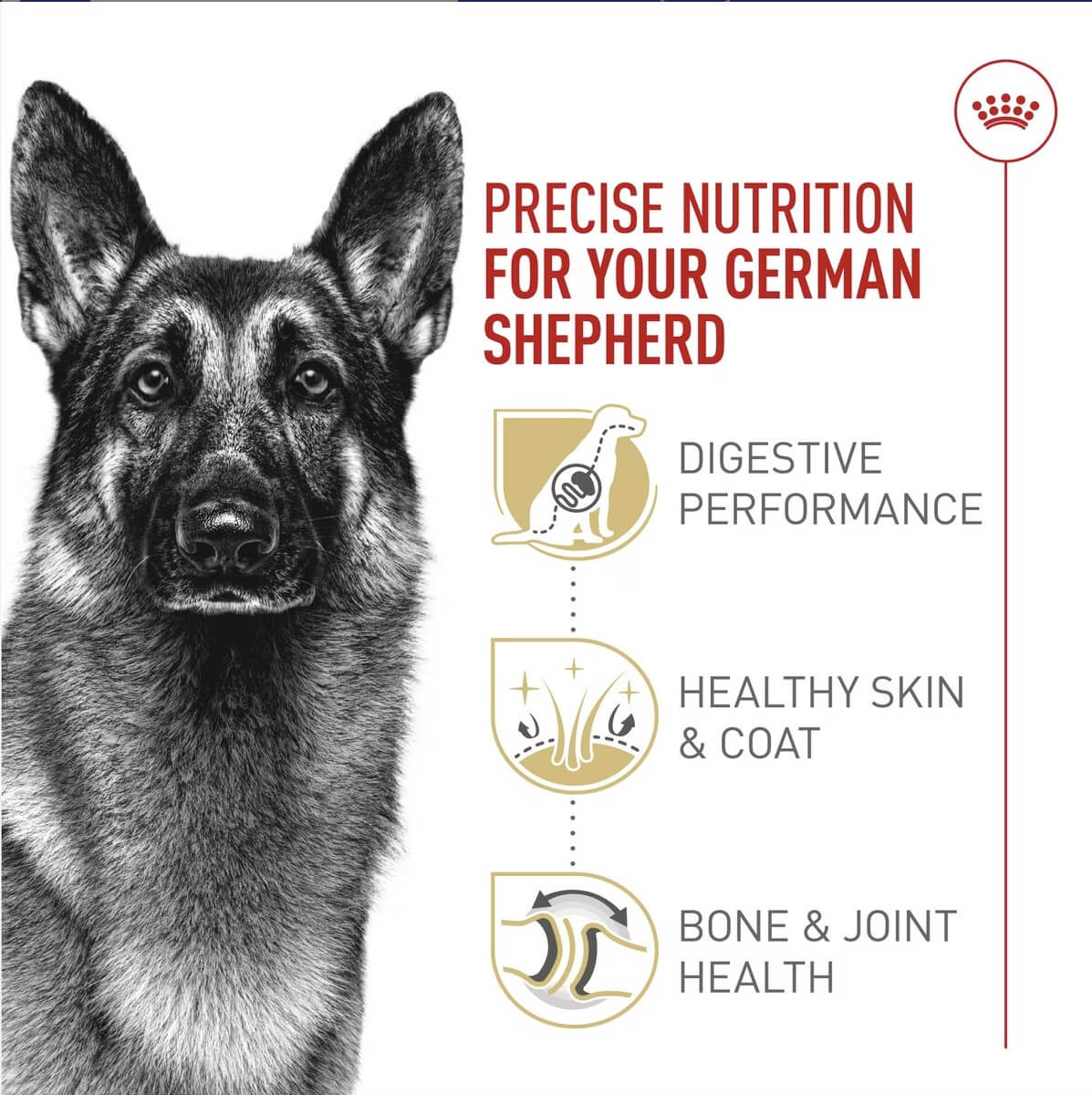
The German Shepherd's digestive sensitivity is not a generalization — it has a physiological basis. Longer colonic transit time combined with higher intestinal permeability creates conditions where fermentation occurs more readily, producing gas, loose stools, and odor that owners of this breed know well. Royal Canin's response is a dual approach: L.I.P. proteins selected specifically for very high digestibility rates, paired with a calibrated fiber system of powdered cellulose and beet pulp that regulates transit speed and limits bacterial fermentation. The practical outcome — consistently reported across thousands of owner reviews — is firmer, less odorous stools and a significant reduction in the digestive distress episodes that characterize German Shepherds on less targeted formulas.
Skin and coat performance is the second pillar. German Shepherds carry a dense double coat that reflects their systemic health closely — dull, flaky, or thinning coats are among the first signs of nutritional inadequacy in the breed. The formula addresses this through EPA at 0.17% and DHA at 0.07% from fish oil, combined with L-tyrosine and an exclusive nutrient complex designed to reinforce the skin's barrier function. Owner reports of coat improvements — increased shine, reduced shedding, and more consistent texture — appear with notable frequency in long-term reviews across all major retail platforms.
Joint health is supported through 743 mg/kg of glucosamine and 8 mg/kg of chondroitin sulfate — both at levels that meaningfully support cartilage integrity in a large breed whose working temperament places consistent mechanical demand on its musculoskeletal system. These are not token inclusions; the glucosamine figure in particular is among the higher non-prescription concentrations available in a retail adult dog formula.
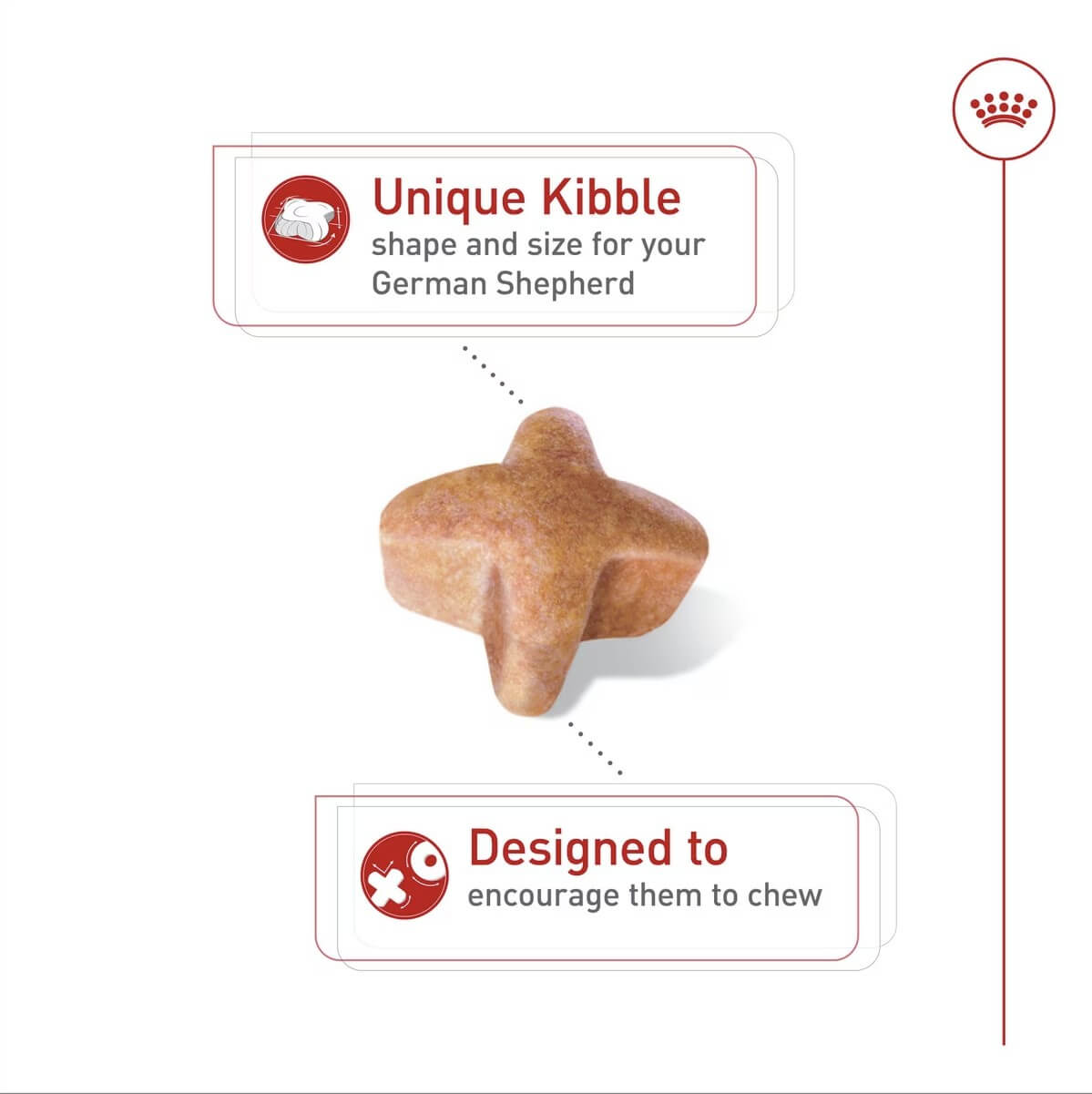
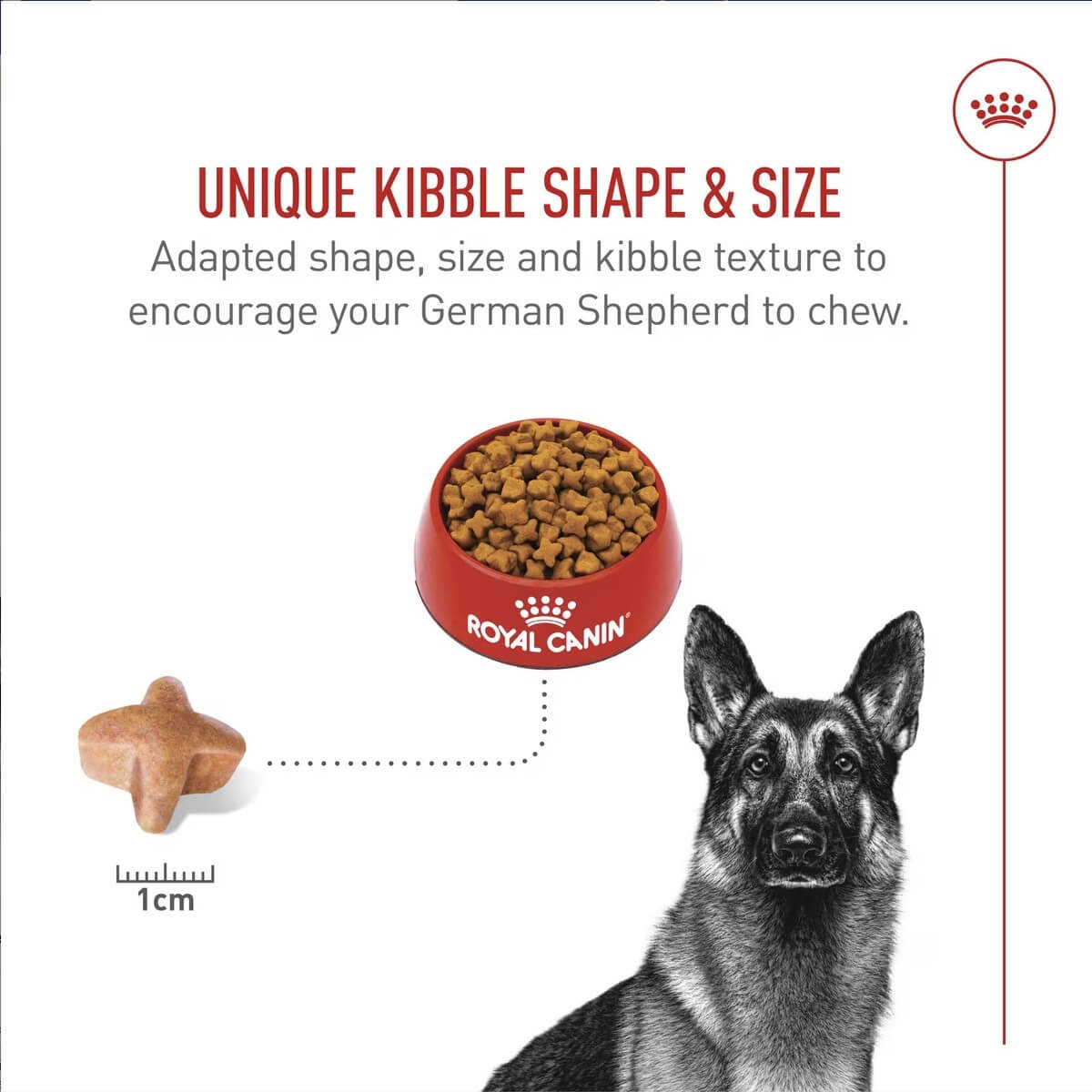
The physical kibble design in this formula is not incidental. Royal Canin engineers the shape, surface texture, and density of the piece specifically to match the German Shepherd's elongated muzzle and strong bite — the goal being to create a chewing action that slows ingestion and improves the mechanical contact between kibble and tooth surface for mild dental benefit. Consumer feedback across Chewy, Petco, and Amazon reflects strong palatability results: German Shepherds with histories of food refusal on other premium brands regularly accept this formula without resistance. The crunchy texture contributes to tartar reduction through abrasion, and the aroma — driven by the natural flavor and hydrolyzed yeast — appears to be reliably appealing across individual preferences within the breed.
Royal Canin produces every product in its own company-owned manufacturing facilities, all of which carry ISO 9001:2008 certification for Quality Management and ISO 22000 certification for Food Safety. Incoming raw materials are tested on arrival, production batches are monitored throughout processing, and finished products undergo evaluation before leaving the facility. The German Shepherd Adult formula meets AAFCO nutritional profiles for adult dog maintenance and is backed by Royal Canin's 100% satisfaction guarantee. The brand's recent recall history is minimal relative to its production volume, and its sustained veterinary endorsement globally reflects the consistency of its safety and quality record.
The comparison against Purina Pro Plan Large Breed Adult is the most relevant for this price tier. Pro Plan leads with named whole chicken and delivers higher crude protein — advantages on ingredient transparency and protein quantity. Royal Canin counters with breed-specific kibble engineering, a more targeted digestive fiber system, and glucosamine levels that Pro Plan's standard large-breed formula does not match. For a German Shepherd without digestive sensitivities, Pro Plan may represent better protein value. For one with documented GI issues, Royal Canin's functional specificity typically produces superior outcomes. Against Hill's Science Diet Large Breed, the two brands occupy similar price territory and share strong veterinary backing, but Hill's formula is general-purpose where Royal Canin is breed-calibrated — a meaningful difference for a breed as nutritionally specific as the German Shepherd. Blue Buffalo Wilderness Large Breed offers higher protein and a grain-free profile, but without the clinically focused digestive engineering that makes Royal Canin the more defensible choice for German Shepherds with sensitive systems.
Royal Canin German Shepherd Adult is the clearest match for owners of purebred German Shepherds aged 15 months and older who are dealing with one or more of the breed's characteristic challenges — chronic digestive upset, poor stool quality, coat dullness, skin sensitivity, or early joint discomfort. It is equally appropriate for working dog handlers, K9 unit owners, and anyone whose German Shepherd has cycled through multiple formulas without resolution. The willingness to pay approximately $3.90 per pound is a practical prerequisite — this is a premium-tier product and is priced accordingly. The formula is not appropriate for dogs with confirmed wheat or gluten sensitivities, owners committed to grain-free or high-protein feeding protocols, or multi-dog households where the per-pound cost becomes prohibitive at scale.
The rating across Chewy, Petco, and Amazon holds consistently between 4.6 and 4.8 out of 5 stars across a substantial verified review base. The most striking pattern in positive feedback is the frequency with which owners describe this formula as a resolution after extended periods of failure on other foods — including other premium and vet-recommended alternatives. Digestive normalization and coat improvement dominate the success stories, often described as visible within two to four weeks of transitioning. Critical reviews cluster around two concerns: the ingredient list, specifically the brewers rice lead and the chicken by-product meal, which some owners find inconsistent with the premium price; and individual palatability failures, which occur but represent a distinct minority of the overall feedback. Price remains the most commonly cited barrier among owners who express satisfaction with the formula's outcomes but struggle to sustain the cost long-term.
Royal Canin prescribes a structured 7-day transition protocol: Days 1 and 2 at 75% previous food and 25% Royal Canin; Days 3 and 4 at equal proportions; Days 5 and 6 at 25% previous food and 75% Royal Canin; Day 7 onward at 100% Royal Canin exclusively. For daily feeding quantities, a typical active adult German Shepherd in the 65 to 70 lb range should receive approximately 3 to 3.5 cups per day, split across two meals. Adjustments for activity level, spay/neuter status, and individual metabolism are standard — the packaging feeding chart provides weight-based guidance, and veterinary input is recommended for dogs with specific health conditions.
For the specific dog this formula was designed for, the answer is yes — with appropriate caveats. Royal Canin German Shepherd Adult delivers breed-level nutritional precision that generic large-breed formulas are structurally incapable of replicating. The digestive fiber system, the EPA and DHA skin support, the glucosamine joint dosing, and the breed-matched kibble geometry are all functional — not cosmetic — differentiators. The trade-offs are the ingredient list's lack of meat-first optics, a protein percentage that reads lower than premium competitors, and a price point that requires deliberate budgeting. For German Shepherd owners whose dogs have failed on other foods, this formula's track record of producing real outcomes — documented repeatedly in owner feedback across every major retail platform — makes it the most defensible single choice in this breed's nutrition landscape.
Ready to try Royal Canin?
Check Best Price →Some links on this page are affiliate links. We may earn a small commission at no extra cost to you.
Yes, Royal Canin German Shepherd Adult is specifically formulated for purebred German Shepherds 15 months and older, targeting the breed's known sensitivities around digestion, skin, coat, and joint health.
The main ingredients are brewers rice, chicken by-product meal, brown rice, oat groats, chicken fat, pork meal, fish oil, powdered cellulose, beet pulp, and wheat gluten, along with glucosamine, chondroitin, and a full vitamin and mineral pack.
Royal Canin German Shepherd Adult contains 321 kcal per cup (3,771 kcal/kg), making it a moderate-calorie formula suitable for adult weight management.
Yes, this formula contains grains including brewers rice, brown rice, and oat groats — it is not a grain-free diet.
Yes, Royal Canin is widely recommended by veterinarians worldwide and has been developing science-backed pet nutrition since 1968.