| 🥩 Food Type | Dry Food |
| 📅 Life Stage | Adult |
| 💪 Health Needs | Allergies|Sensitive Stomach|Digestive Health|Skin & Coat |
| 🏷️ Brand | Instinct |
| ⭐ Our Rating | 4.5 / 5 |
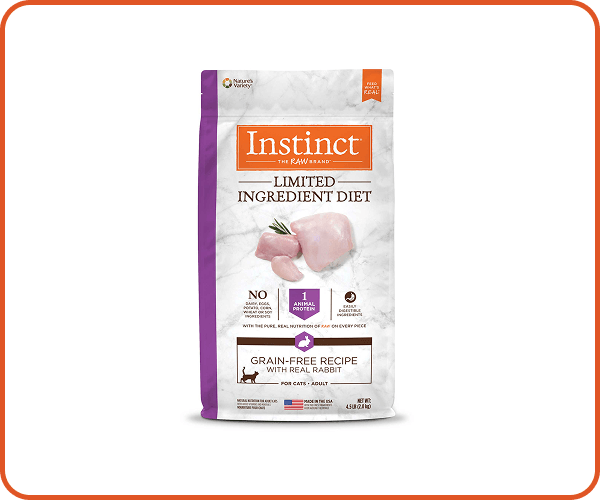
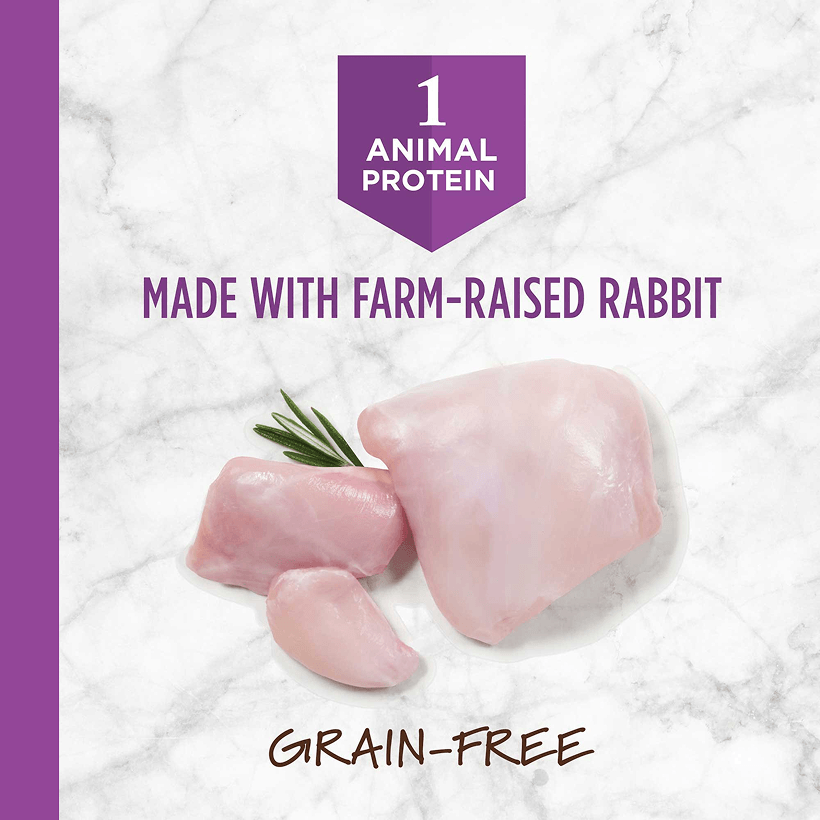
Rabbit is one of the rarest proteins in commercial cat food. Most cats have never been exposed to it — which is precisely its value for elimination diet feeding. When a cat has been cycling through chicken, turkey, fish, and beef-based formulas without resolution of skin itching or chronic digestive upset, rabbit offers a genuinely novel starting point. Instinct Limited Ingredient Diet Grain-Free Recipe with Real Rabbit takes that novel protein and applies the same freeze-dried raw coating technology that distinguishes the Instinct Original line — ensuring that every piece carries the nutritional profile of raw rabbit rather than just the heat-processed interior. This Instinct Limited Ingredient Diet Real Rabbit review examines whether that architecture works for the sensitive cats it targets.
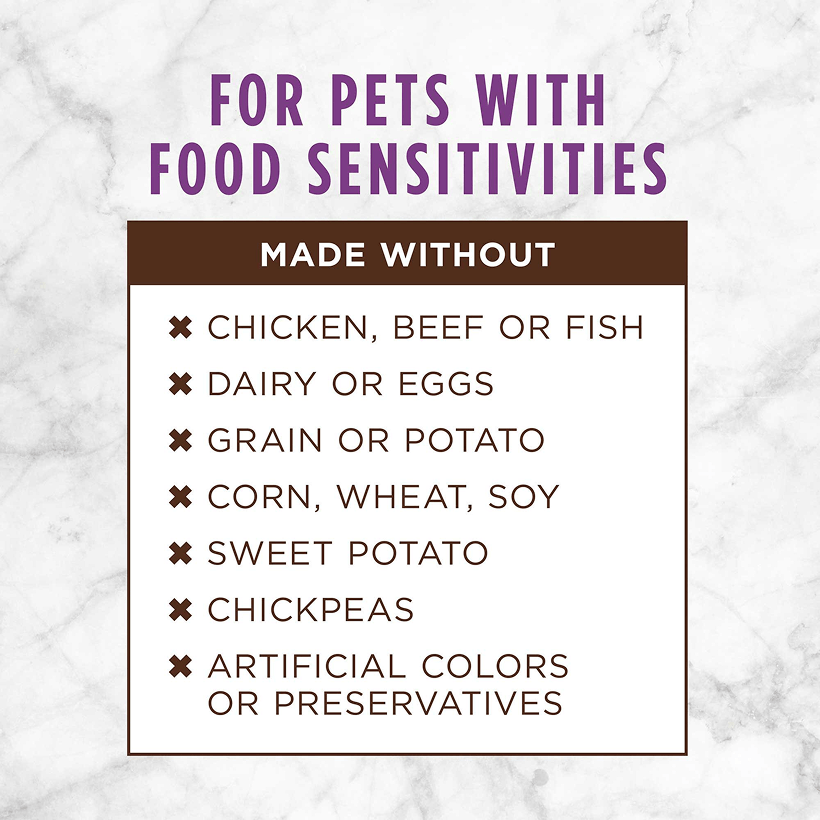
Instinct is produced by Nature's Variety from its SQF-certified facility in Lincoln, Nebraska. The Limited Ingredient Diet cat line was built around a specific and honest acknowledgment: most premium cat food — even grain-free, by-product-free formulas — contains too many ingredients to function reliably as an elimination diet tool. The Instinct LID line reduces the ingredient architecture to its minimum functional components: one animal protein, one vegetable, a fat source, necessary functional additives, and a vitamin and mineral package. The Real Rabbit Recipe is the most novel protein variant in the cat LID lineup, targeting cats that have reacted to chicken, turkey, beef, fish, dairy, and eggs — a sensitivity profile that eliminates most of the commercial cat food market. The rabbit is farm-raised, sourced from France and Italy according to Instinct's confirmed sourcing disclosures — a geographic detail that reflects the limited commercial availability of rabbit as a pet food protein in North America. The formula meets AAFCO nutritional profiles for adult cat maintenance through calculated nutrient analysis, is made in the USA, and carries Instinct's 100% satisfaction guarantee.
The complete ingredient list, sourced directly from the product label and confirmed across Petco and Chewy, reads as follows: Rabbit Meal, Peas, Tapioca, Canola Oil (Preserved with Mixed Tocopherols and Citric Acid), Rabbit, Natural Flavor, Coconut Oil, Montmorillonite Clay, Taurine, Choline Chloride, Potassium Chloride, Vitamins (Vitamin E Supplement, L-Ascorbyl-2-Polyphosphate, Niacin Supplement, Thiamine Mononitrate, d-Calcium Pantothenate, Vitamin A Supplement, Riboflavin Supplement, Pyridoxine Hydrochloride, Vitamin B12 Supplement, Folic Acid, Vitamin D3 Supplement, Biotin), DL-Methionine, Minerals (Zinc Proteinate, Iron Proteinate, Copper Proteinate, Manganese Proteinate, Sodium Selenite, Ethylenediamine Dihydriodide), Freeze Dried Rabbit, Salt, Pumpkinseeds, Rosemary Extract.
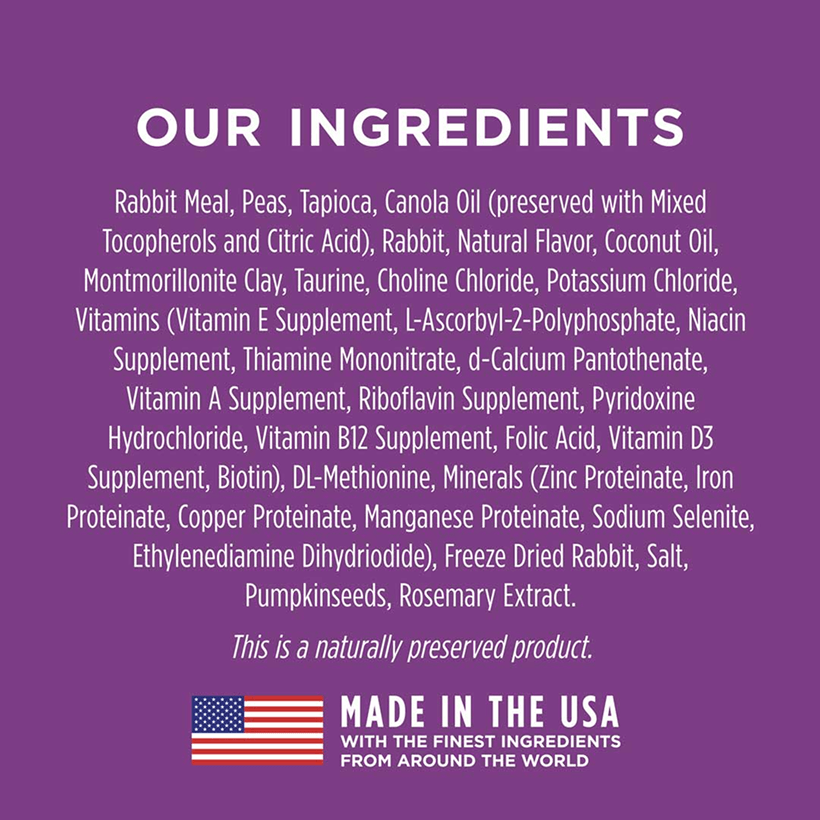
The ingredient list outside the vitamin and mineral package contains only fourteen entries — among the shortest in any complete dry cat food reviewed. Rabbit meal opens in first position — pre-dried and concentrated, delivering the formula's primary protein density independent of moisture contribution. As a meal, rabbit arrives already rendered and dried before inclusion, meaning its protein per unit weight is higher than whole rabbit would register at the same ranking. Peas in second are the formula's single vegetable — the sole carbohydrate contributor alongside tapioca, and the only plant-derived ingredient other than the oil and fiber sources. In a true LID context, peas as the only vegetable means cats with pea sensitivities cannot use this formula — an important consideration for owners whose cats have reacted to pea-containing formulas before. Tapioca in third is the isolated starch from cassava root — a grain-free, gluten-free, low-allergen carbohydrate binder with minimal protein contribution and no plant family overlap with legumes or grains. Canola oil preserved with mixed tocopherols and citric acid provides omega-6 fatty acids naturally. Rabbit in fifth is the whole meat form — fresh rabbit muscle meat contributing complete amino acids and the naturally occurring fat profile of rabbit tissue. The dual rabbit-meal-plus-whole-rabbit approach mirrors the strategy used in Instinct LID Lamb for dogs, applying the same fresh-and-concentrated pairing to ensure both protein density and amino acid completeness from a single species.
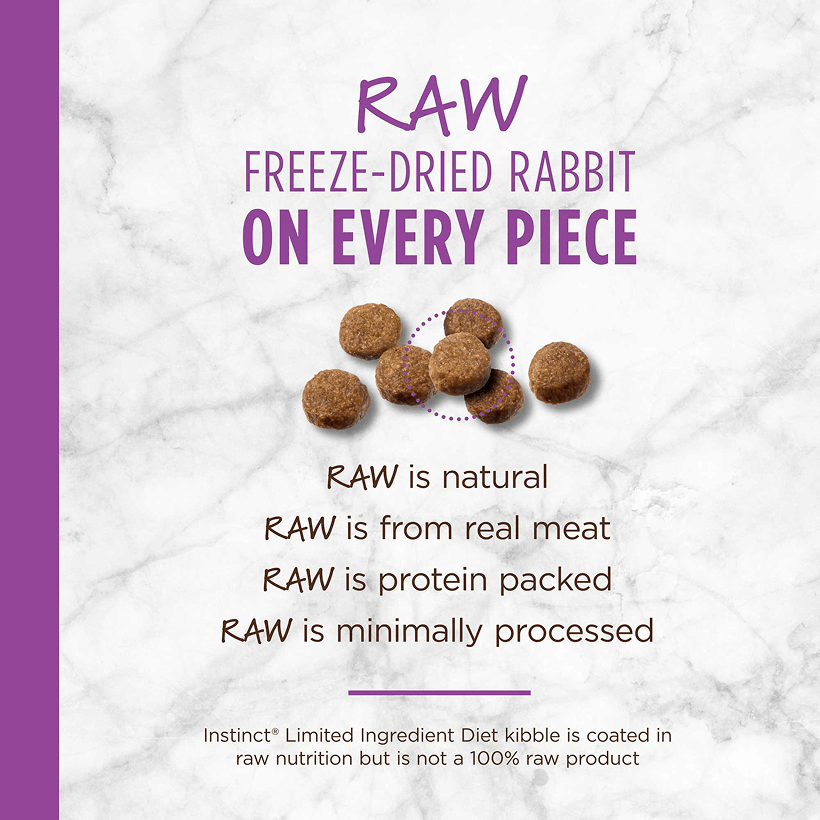
Coconut oil provides medium-chain triglycerides — a fat source with documented metabolic and cognitive support properties. Montmorillonite clay is the AAFCO-approved anti-caking mineral used across Instinct's dry food range. Taurine is guaranteed — the essential amino acid for feline cardiac and retinal health that AAFCO requires and that is particularly important to supplement in novel protein formulas where the taurine content of the specific protein source may differ from more common meats. DL-Methionine supports urinary pH management — a functional addition relevant for cats that are prone to struvite crystal formation. The mineral system uses chelated proteinate forms throughout — zinc proteinate, iron proteinate, copper proteinate, manganese proteinate — providing superior bioavailability compared to inorganic mineral sulfates. Freeze dried rabbit appears lower in the list as the raw coating element — crushed freeze-dried rabbit tumbled onto every piece after extrusion, maintaining the single-protein integrity while adding the heat-sensitive enzyme and amino acid profile of raw rabbit to the kibble surface. Pumpkinseeds add trace zinc and omega fatty acids. Natural preservation uses rosemary extract and the mixed tocopherols already present in the canola oil — no artificial preservatives anywhere.
All figures below are sourced from Petco and confirmed across multiple authorized retailers:
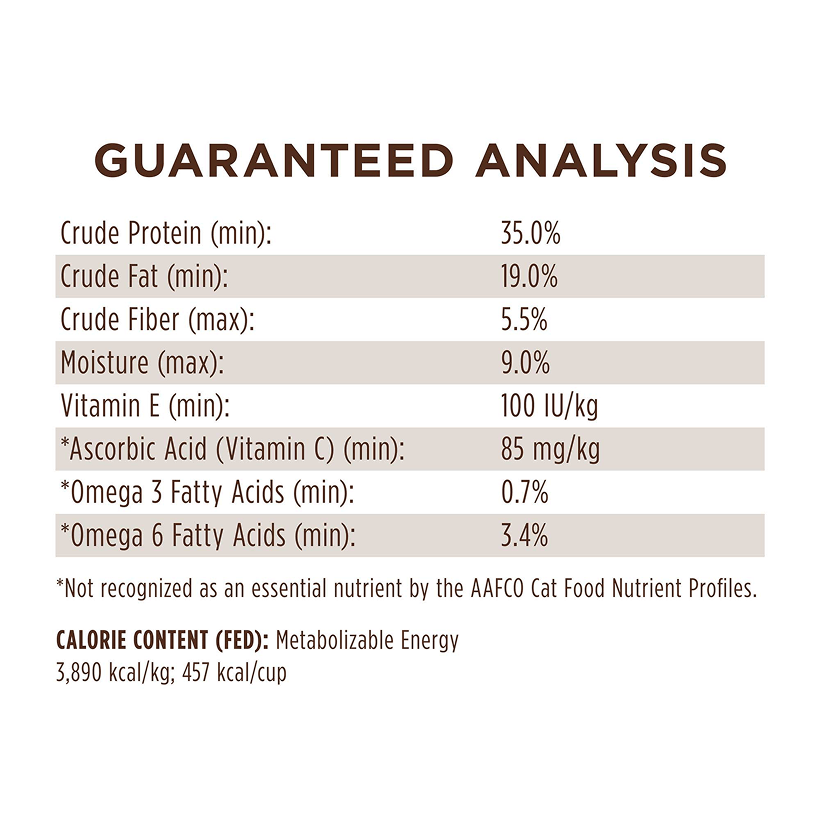
With moisture at 9%, the as-fed and dry matter values are very close. On a dry matter basis, protein reaches approximately 38.5%, fat approximately 20.9%, and estimated carbohydrates around 28%. The 35% as-fed protein figure is the strongest in the cat LID segment reviewed here, and it comes from a single species without plant protein supplementation — no pea protein, no corn gluten meal — making the animal-to-plant protein ratio genuinely high. The fat at 19% is meaningful for a cat LID formula and creates the same caloric density concern as the Instinct LID Lamb dog formula: based on the formula architecture, the caloric density is estimated at approximately 470–490 kcal per cup — requiring careful portioning for less active or overweight cats. The omega-6 figure at 3.4% is among the stronger values in any reviewed cat dry food, reflecting the rabbit fat contribution and canola oil addition.
The therapeutic value of rabbit as a protein source in elimination diet feeding comes from a single characteristic: most cats in most households have never eaten it. Chicken is in virtually every mainstream cat food. Turkey appears in dozens of formulas. Fish is ubiquitous. Beef and lamb appear frequently. Rabbit — as a commercially available cat food protein — remains genuinely rare, which means a cat with years of dietary history has almost certainly never developed an immune response to it. When a cat has been reacting to its food — scratching, developing hot spots, producing chronic loose stools — and the owner cannot identify the trigger through ingredient elimination on standard formulas, rabbit as the sole protein in a true LID context offers the most reliable clean diagnostic starting point available in retail cat food. The freeze-dried raw coating preserves the nutritional and enzymatic profile that high-temperature extrusion compromises — adding a raw nutrition layer to the novel protein concept that standard LID formulas without raw coating cannot provide.
The kibble is small and dense with the characteristic slightly irregular surface of a freeze-dried raw coating. The rabbit aroma is mild compared to chicken or fish-forward formulas — a characteristic that has two practical implications. Cats that respond strongly to poultry or fish aromas may show less immediate enthusiasm on initial presentation; in practice, most cats adapt within the first several meals as the novel protein establishes its own palatability association. The more common owner report on Chewy is the opposite pattern: cats that had been eating chicken or fish formulas with declining enthusiasm accept the rabbit formula with renewed interest, and cats that had been diagnosed with food hypersensitivity by veterinarians and placed on prescription LID diets accept Instinct LID Rabbit as a comparably tolerated retail alternative. A meaningful subset of cats — particularly those with IBD or extreme digestive sensitivity — has produced mixed results, with some owners reporting initial vomiting that resolved after a slow transition and others finding the formula incompatible with their cat's specific sensitivity profile.
Instinct LID Real Rabbit is manufactured at Nature's Variety's own SQF-certified facility in Lincoln, Nebraska. The rabbit is sourced from farms in France and Italy — a supply chain that reflects the European dominance of commercial rabbit farming rather than a premium sourcing decision, though Instinct confirms all ingredients meet USA standards for pet food manufacturing. No recalls affecting the Instinct LID cat dry food line have been recorded through early 2026. The brand maintains its 100% satisfaction guarantee across all products — unused portions are refundable through the retailer.
The comparison with Hill's Science Diet Sensitive Stomach & Skin Adult Chicken — reviewed separately — illustrates the fundamental difference between sensitivity management and elimination diet nutrition. Hill's addresses sensitivity by using highly digestible ingredients and prebiotic support — but chicken remains the primary protein, meaning cats with chicken sensitivity cannot use it. Instinct LID Rabbit's value is precisely the absence of chicken, beef, fish, and all other common proteins. Against Purina Pro Plan Sensitive Skin & Stomach Adult Salmon — also reviewed — the same distinction applies: Pro Plan's salmon provides a novel alternative to chicken, but fish remains among the most common feline allergens, and a cat with confirmed fish sensitivity has no appropriate option in the Pro Plan sensitive lineup. Instinct LID Rabbit is the only retail dry cat food reviewed here that can be used by cats with confirmed sensitivities to chicken, beef, fish, dairy, and eggs simultaneously.
Instinct Limited Ingredient Diet Real Rabbit is most appropriate for adult cats with confirmed or suspected food sensitivities to chicken, beef, fish, dairy, and eggs — cats for whom the elimination diet process has exhausted more common novel protein alternatives and whose owners need a single-species, short-ingredient-list retail option. It is a strong choice for cats currently on prescription LID diets whose owners want a retail alternative at lower cost, provided the veterinarian has confirmed rabbit as a safe protein for that specific cat. The freeze-dried raw coating adds nutritional value beyond standard LID formulas. It is not appropriate for cats with confirmed pea sensitivities — peas are the sole vegetable and appear in second position. Given the fat content and estimated caloric density, overweight or sedentary cats require careful portioning. Owners requiring AAFCO feeding trial validation should note Instinct uses calculated nutrient profiling.
Across Chewy and Petco, Instinct LID Real Rabbit holds ratings between 4.4 and 4.6 out of 5 stars from a purchase base that is overwhelmingly composed of owners managing documented food sensitivities. The positive feedback pattern is specific and outcome-driven: cats with years-long skin and digestive issues finding resolution within weeks of transitioning, veterinarians recommending this formula as a retail alternative to prescription LID diets, and cats that had been refusing food for days due to sensitivity reactions eating the rabbit formula without resistance. One Petco reviewer whose cat had IBD described the formula as the only food maintaining stable digestion after multiple prescription formula failures. Critical feedback concentrates on individual cats that vomited during transition — attributed in most cases to the transition pace being too rapid for highly sensitive digestive systems — and on a small number of reports about bone fragments in the formula, which Instinct addresses by noting that rabbit meal by regulation may not contain heads, feet, or intestines, but that small bone fragments from muscle meat cuts can appear.
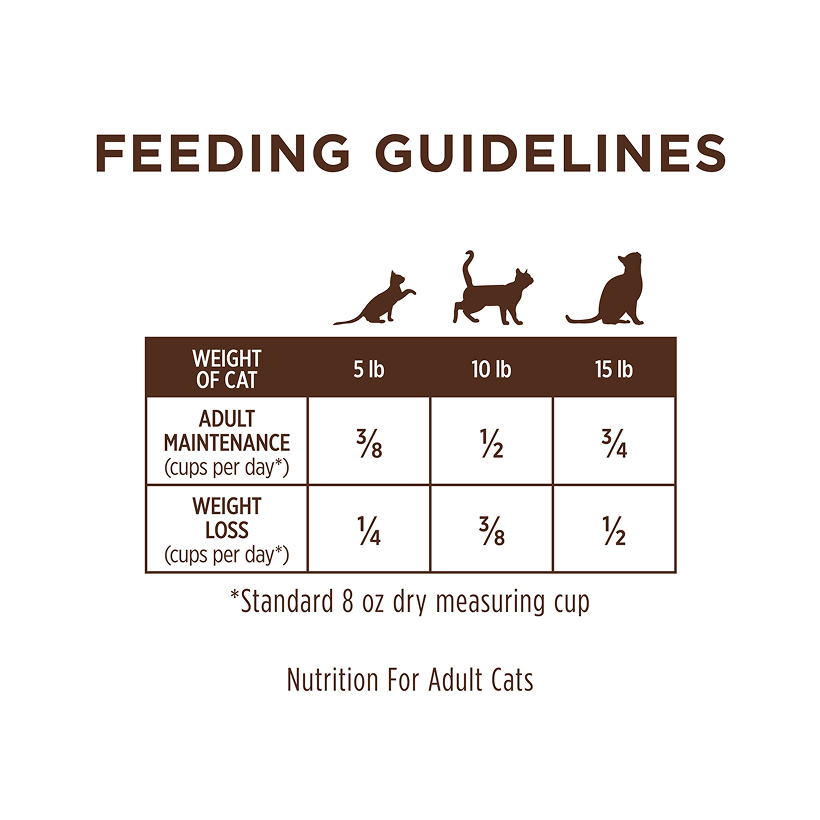
Instinct recommends a 5 to 7 day gradual transition — with a specific recommendation to extend to 10 to 14 days for cats with IBD, chronic digestive sensitivity, or those transitioning from prescription diets. Daily feeding amounts from the official feeding guide (standard 8 oz dry measuring cup):
| Cat Weight | Adult Maintenance (cups/day) | Weight Loss (cups/day) |
|---|---|---|
| 5 lbs | ⅜ | ¼ |
| 10 lbs | ½ | ⅜ |
| 15 lbs | ¾ | ½ |
Instinct specifically recommends supplementing this dry food with raw or wet food to increase daily moisture intake — a recommendation that is particularly important for cats with urinary tract history, where hydration management is a concurrent health concern alongside the dietary sensitivity management. Cover and refrigerate any opened bag promptly — the absence of synthetic preservatives means the formula is more moisture-sensitive than artificially preserved alternatives. Fresh water should always be available.
Instinct Limited Ingredient Diet Real Rabbit earns its position as the premier retail elimination diet option for highly sensitive cats through a combination of qualities that no other reviewed formula matches simultaneously: rabbit as the single animal protein — the rarest commercially available cat food protein — in both meal and whole meat forms, freeze-dried raw rabbit coating on every piece, peas as the sole vegetable, no chicken, beef, fish, dairy, eggs, grain, corn, wheat, or soy anywhere in the formula, chelated organic minerals throughout, and a zero-recall manufacturer history. The honest limitations — no taurine guarantee at therapeutic levels for IBD cats, peas present for owners managing pea sensitivity alongside protein sensitivity, and a caloric density that requires portion discipline — are real but manageable for the specific cat population this formula was designed to serve. For the cat whose sensitivity workup has eliminated every common protein and whose owner needs a retail-accessible, short-ingredient elimination diet without a prescription, Instinct LID Rabbit is the most appropriate choice available.
Ready to try Instinct?
Check Best Price →Some links on this page are affiliate links. We may earn a small commission at no extra cost to you.
Rabbit is one of the rarest proteins in commercial cat food — most cats have never been exposed to it, meaning they are unlikely to have developed an immune response. This makes it a valuable elimination diet starting point for cats that have reacted to chicken, beef, fish, turkey, and dairy.
No — prescription hydrolyzed protein diets work by breaking proteins into fragments too small to trigger immune response. Instinct LID Rabbit works by using a novel protein the cat has not encountered before. Prescription diets are more reliable for cats with severe or documented allergies; Instinct LID Rabbit is a retail alternative appropriate for mild to moderate sensitivities with veterinary guidance.
Yes — peas are the formula's single vegetable and appear in second position. The formula is not appropriate for cats with confirmed pea sensitivities.
Instinct recommends a 5 to 7 day transition, but cats with IBD, chronic digestive sensitivity, or those moving from prescription diets should use a 10 to 14 day protocol — starting with 10–20% Instinct and increasing by 10% every two days.
No — Instinct has no recall history across any of its dry cat food formulas through early 2026.