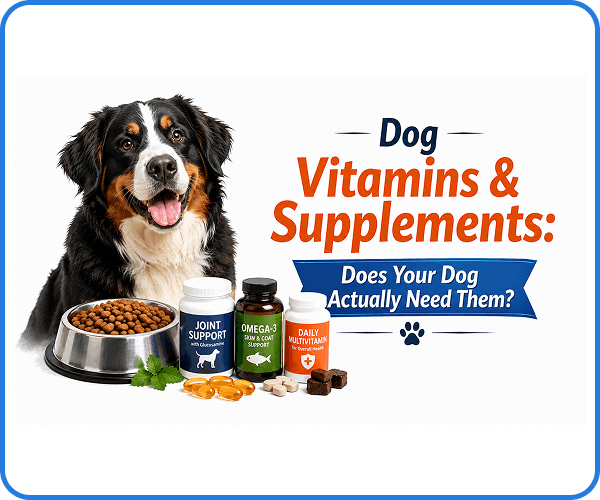
The pet supplement industry has surpassed $1.5 billion annually — and it's growing fast. Walk into any pet store and you'll find an entire aisle of chewable vitamins, joint powders, probiotic treats, and omega capsules all promising to transform your dog's health. But here's the uncomfortable question most brands don't want you to ask: does your dog actually need any of this?
The answer isn't a simple yes or no. Some supplements have genuine scientific backing and can make a real difference for specific dogs. Others are expensive placebos — or worse, potentially harmful when given unnecessarily. In this guide, we'll cut through the marketing noise and break down exactly which dog vitamins and supplements are worth your money, which ones to skip, and how to tell the difference.
Do Dogs Need Vitamins If They Eat Commercial Dog Food?
This is the most important question to answer first, and the answer from veterinary science is clear: most dogs eating a complete and balanced commercial diet do not need additional vitamins or supplements.
Every dog food that carries an AAFCO (Association of American Feed Control Officials) nutritional adequacy statement is formulated to provide 100% of the vitamins, minerals, and nutrients your dog needs for their life stage. This includes vitamins A, D, E, K, the full B-complex, and essential minerals like calcium, phosphorus, zinc, and selenium. If the bag says "complete and balanced," the vitamins are already in there.
PetMD states it plainly: dogs do not need separate multivitamins if they are on a complete and balanced diet, as they get what they need from their food. In fact, under certain circumstances, vitamin supplementation can do more harm than good — particularly with fat-soluble vitamins like A and D, which accumulate in the body and can reach toxic levels.
So if your dog is healthy, eating a quality AAFCO-compliant food, and showing no signs of deficiency or health issues — you likely don't need to add anything. Save your money.
When Do Dogs Actually Need Supplements?
That said, there are legitimate scenarios where targeted supplementation makes a real difference. The key word is targeted — meaning a specific supplement for a specific, identified need, ideally recommended by your veterinarian.
Dogs with joint disease or arthritis — large breeds, senior dogs, and breeds predisposed to hip and elbow dysplasia (like German Shepherds, Labradors, and Golden Retrievers) often benefit from joint support supplements. This is the single largest category in the pet supplement market.
Dogs with skin and coat issues — chronic itching, dull coat, excessive shedding, or dry, flaky skin can often be improved with omega fatty acid supplementation, particularly when the dog's regular food doesn't provide sufficient levels.
Dogs with digestive problems — chronic loose stools, gas, or inconsistent digestion may respond well to probiotic supplements that help rebalance the gut microbiome.
Dogs on homemade or raw diets — this is critical. Unlike commercial foods, homemade diets are rarely nutritionally complete without supplementation. Dogs eating home-prepared meals almost always need added vitamins and minerals to avoid dangerous deficiencies in calcium, zinc, vitamin D, and other essential nutrients.
Senior dogs — aging dogs may benefit from antioxidants (vitamins C and E) to combat oxidative stress, joint supplements for mobility, and brain-supporting nutrients like choline and DHA for cognitive function.
Dogs recovering from illness or surgery — veterinarians may prescribe specific supplements to support recovery, immune function, or appetite stimulation during rehabilitation.
Dog Supplements That Actually Work: What the Science Says
Not all supplements are created equal. Here's an honest, evidence-based breakdown of the most popular categories — what works, what's questionable, and what to avoid.
Omega-3 Fatty Acids — Strong Evidence
Omega-3s (EPA and DHA from fish oil) are arguably the most scientifically supported supplement for dogs. Multiple veterinary studies confirm their benefits for reducing inflammation, supporting skin and coat health, improving joint comfort in dogs with osteoarthritis, and supporting brain development in puppies and cognitive function in senior dogs.
A systematic review published in the Journal of Small Animal Practice (2024) found that omega-3 fatty acids could provide analgesic effects for dogs with osteoarthritis — making them one of the few supplements with solid clinical evidence for joint pain relief. Fish oil from wild-caught sources is the gold standard, though algae-based omega-3 is emerging as a sustainable alternative.
Verdict: Recommended. One of the few supplements with consistent scientific backing across multiple health areas.
Glucosamine & Chondroitin — Mixed Evidence
Here's where things get uncomfortable for the pet supplement industry. Glucosamine and chondroitin are the best-selling joint supplements for dogs — yet the scientific evidence for their effectiveness is surprisingly weak.
A 2017 review of numerous studies found low evidence of efficacy for glucosamine in treating joint discomfort in dogs. The same 2024 systematic review in the Journal of Small Animal Practice that supported omega-3s concluded that chondroitin-glucosamine products have not been shown to have an analgesic effect in canine osteoarthritis.
That doesn't mean glucosamine is useless — many veterinarians and dog owners report subjective improvements, and the supplement is generally very safe with minimal side effects. But the clinical evidence is "hit or miss," and newer alternatives like UC-II collagen and omega-3 fatty acids are showing stronger results in recent studies.
Verdict: Safe but unproven. May help some dogs, but omega-3s and UC-II collagen have stronger evidence. Worth trying for senior or large breed dogs, but manage expectations.
Probiotics — Growing Evidence
Probiotic supplements for dogs are one of the fastest-growing categories in pet supplements, and for good reason — the science is catching up to the hype. Clinically studied strains like Bacillus subtilis (DE111) have genuine peer-reviewed evidence supporting their use for gut health, immune function, and digestive regularity in dogs.
Probiotics work by introducing beneficial bacteria into the digestive tract, helping maintain a healthy microbiome balance. They're particularly useful for dogs on antibiotics (which kill good bacteria along with bad), dogs transitioning between foods, and dogs with chronic mild digestive issues.
Verdict: Recommended for dogs with digestive issues. Look for products with named, clinically studied strains — not generic "probiotic blend" labels without strain specification.
Multivitamins — Generally Unnecessary
The general-purpose dog multivitamin is the supplement most likely to be a waste of money for the average dog. If your dog eats a complete and balanced commercial food, a multivitamin simply adds more of what they're already getting — and in the case of fat-soluble vitamins (A, D, E, K), this can actually push levels into harmful territory.
Multivitamins make sense only for dogs on incomplete diets (homemade meals without professional formulation), dogs with diagnosed malabsorption conditions, or dogs whose veterinarian has specifically identified a nutritional gap.
Verdict: Skip for most dogs. Only use if recommended by your veterinarian for a specific deficiency.
Calming Supplements — Limited Evidence
Supplements containing ingredients like L-theanine, chamomile, valerian root, and melatonin are marketed for dogs with anxiety, noise phobias, or separation stress. The evidence is limited and largely anecdotal, though some dogs do appear to respond positively.
Verdict: May help mild cases. For moderate to severe anxiety, consult your veterinarian about behavioral modification and, if needed, prescription options that have stronger clinical evidence.
Supplements by Life Stage: What Your Dog Needs and When
| Life Stage | Recommended Supplements | Why |
|---|---|---|
| Puppies (under 1 year) | DHA (omega-3) | Supports brain and vision development |
| Active adults (1–6 years) | Omega-3, probiotics (if needed) | Coat health, digestion, anti-inflammatory |
| Large breeds (any age) | Omega-3, glucosamine or UC-II collagen | Joint support for breeds prone to dysplasia |
| Senior dogs (7+ years) | Omega-3, joint support, antioxidants (C & E), choline | Mobility, cognitive function, immune support |
| Dogs on homemade diets | Complete vitamin/mineral supplement | Essential — homemade diets are rarely balanced without it |
How to Spot a Quality Dog Supplement
The pet supplement industry is poorly regulated compared to human supplements and pharmaceuticals. This means quality varies enormously between products. Here's what to look for:
NASC Quality Seal — the National Animal Supplement Council requires members to pass rigorous facility audits, maintain adverse event reporting systems, and follow strict labeling standards. This is the single most meaningful quality signal in the pet supplement market.
GMP or NSF certification — indicates the product is manufactured in a facility that follows Good Manufacturing Practices, with third-party verification.
Named, clinically studied ingredients — look for specific ingredient names like "glucosamine HCl," "UC-II collagen," or "Bacillus subtilis DE111" rather than vague terms like "joint blend" or "probiotic mix."
Appropriate dosing information — quality supplements provide clear, weight-based dosing guidelines. Products that give a single dose for "all dogs" regardless of size are a red flag.
Avoid: Products with proprietary blends that hide individual ingredient amounts, products with excessive added sugar or artificial coloring, and any supplement that claims to "cure" or "treat" diseases — legally, supplements cannot make therapeutic claims.
The Dangers of Over-Supplementation
More is not better — and this is where well-intentioned owners can actually harm their dogs. Fat-soluble vitamins (A, D, E, K) are stored in the body and can accumulate to toxic levels. Specific risks include:
Vitamin A toxicity — can cause joint pain, bone deformities, and liver damage. Particularly risky when owners add liver or cod liver oil supplements on top of a complete commercial diet that already contains adequate vitamin A.
Vitamin D toxicity — can cause kidney failure, vomiting, excessive thirst, and dangerous calcium buildup. Even moderate over-supplementation over time can cause serious damage.
Calcium over-supplementation — especially dangerous in growing large-breed puppies. Excess calcium can cause skeletal abnormalities and developmental orthopedic disease. This is why large-breed puppy foods are specifically formulated with controlled calcium levels, and adding calcium supplements can be harmful.
The takeaway is simple: never add vitamins or minerals to your dog's diet without veterinary guidance, and never assume that a supplement marketed as "natural" is automatically safe.
Do Dogs on Raw or Homemade Diets Need Supplements?
Absolutely yes. This is the one scenario where supplementation isn't optional — it's essential. Studies consistently show that the vast majority of homemade dog food recipes found online are nutritionally incomplete, with common deficiencies in calcium, zinc, vitamin D, vitamin E, copper, and iodine.
If you feed your dog a homemade or raw diet, you have two responsible options: work with a board-certified veterinary nutritionist to formulate a balanced recipe with appropriate supplements, or use a commercially available vitamin/mineral premix specifically designed for homemade dog food (such as Balance IT or JustFoodForDogs DIY nutrient blends).
Feeding an unbalanced homemade diet without supplementation can lead to serious health consequences over time — including metabolic bone disease, organ damage, and immune dysfunction. The health risks of an unsupplemented homemade diet far exceed any risks of commercial dog food.
Final Verdict: Does Your Dog Need Vitamins and Supplements?
For most dogs eating a quality commercial food — no. Your dog's AAFCO-compliant kibble or wet food already contains every vitamin and mineral they need. Adding a generic multivitamin on top is, at best, wasting money and, at worst, risking over-supplementation toxicity.
For dogs with specific needs — yes, but targeted. Joint supplements (especially omega-3s) for senior and large breed dogs, probiotics for dogs with digestive issues, and complete vitamin/mineral mixes for dogs on homemade diets all have legitimate roles to play.
The golden rule: supplement the dog, not the label. Start with a high-quality food, observe your dog's health, consult your veterinarian when something seems off, and only add supplements that address a specific, identified need. Your dog doesn't need a medicine cabinet — they need the right nutrition in the right amounts.
Frequently Asked Questions
Should I give my dog a daily multivitamin?
No, if your dog eats a complete and balanced AAFCO-compliant commercial food. That food already contains all essential vitamins and minerals. Adding a multivitamin can lead to over-supplementation, particularly of fat-soluble vitamins A and D, which can be toxic at high levels. Only supplement if your veterinarian identifies a specific deficiency.
What is the best supplement for dogs with joint problems?
Omega-3 fatty acids (fish oil) have the strongest scientific evidence for reducing joint inflammation and pain. UC-II collagen is emerging as a promising alternative. Glucosamine and chondroitin are widely used but have mixed clinical evidence. For best results, consult your vet and consider combining omega-3s with a joint supplement.
Are probiotics safe for dogs?
Yes, probiotics are generally very safe for dogs. They're most beneficial for dogs with chronic digestive issues, dogs on antibiotics, or dogs transitioning between foods. Look for products containing clinically studied strains like Bacillus subtilis DE111 rather than generic probiotic blends without strain specification.
Can I give my dog human vitamins?
No. Human vitamins often contain doses inappropriate for dogs and may include ingredients toxic to canines, such as xylitol (a common sweetener in human supplements), high-dose iron, or excessive vitamin D. Always use supplements specifically formulated for dogs.
Do dogs on homemade diets need supplements?
Absolutely. Homemade dog diets are almost never nutritionally complete without supplementation. Common deficiencies include calcium, zinc, vitamin D, and iodine. Work with a board-certified veterinary nutritionist to formulate a balanced recipe, or use a commercially available vitamin/mineral premix designed for homemade dog food.