| 🥩 Food Type | Veterinary Diets |
| 📅 Life Stage | Adult |
| 💪 Health Needs | Allergies|Sensitive Stomach|Digestive Health|Urinary Tract & Kidneys |
| 📏 Breed Size | Small Breed|Medium Breed|Large Breed |
| 🏷️ Brand | Royal Canin |
| ⭐ Our Rating | 4.3 / 5 |
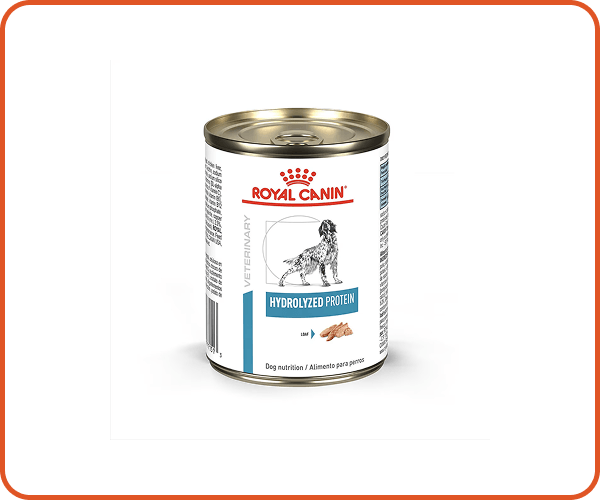
Every limited ingredient diet reviewed on this site — from Instinct LID Lamb to Zignature Trout & Salmon — approaches food sensitivity through the same fundamental strategy: novel protein. Avoid the proteins your dog has been exposed to and hope the ones you introduce have not yet triggered an immune response. Royal Canin Veterinary Diet Hydrolyzed Protein Adult Loaf uses a completely different mechanism. Instead of finding proteins the immune system hasn't met, it breaks proteins into peptide fragments so small the immune system cannot identify them as antigens at all. That distinction — hydrolysis versus novelty — is the reason this formula sits in a different category from every other sensitive dog food reviewed here, and why it requires a veterinary prescription to purchase. This Royal Canin Hydrolyzed Protein Adult wet dog review explains how hydrolysis works, what the ingredient list contains, and which clinical situations this formula genuinely serves.
Royal Canin's Veterinary Diet line is formulated, distributed, and sold exclusively through veterinary authorization. Unlike over-the-counter sensitive formulas that carry "sensitive stomach" or "limited ingredient" marketing language without clinical backing, Veterinary Diet products are developed in partnership with board-certified veterinary nutritionists and internal medicine specialists to address specific diagnosed conditions. The Hydrolyzed Protein Adult Loaf is prescribed for dogs with confirmed or suspected food protein allergies, food protein intolerance, inflammatory bowel disease (IBD), and chronic diarrhea of dietary origin. A prescription is required from a licensed veterinarian who has evaluated your dog and determined that hydrolyzed protein nutrition is the appropriate clinical intervention. This is not a regulatory formality — it reflects the genuine difference between a therapeutic diet designed around a specific disease mechanism and a general-purpose sensitive formula designed around ingredient exclusion. Do not use this formula without veterinary guidance.
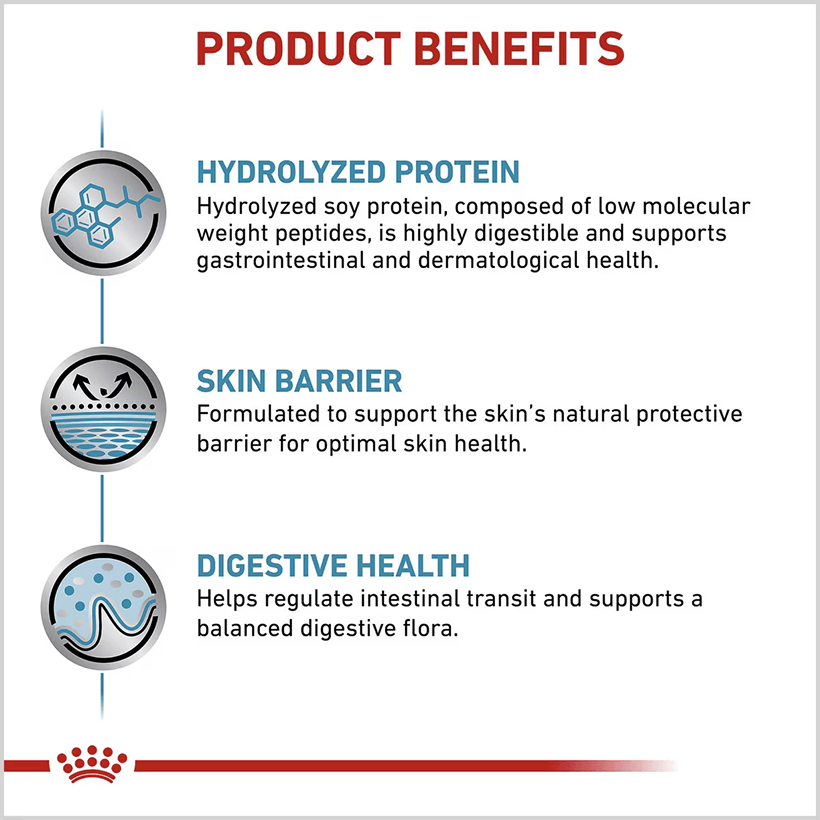
A food allergy is a specific immune response to a protein antigen: the immune system identifies a protein fragment as a foreign invader, mounts an antibody response, and triggers the cascade of inflammation that produces itching, digestive upset, or IBD symptoms. The critical variable is molecular weight — proteins above approximately 10,000 daltons can be recognized as antigens. Proteins below approximately 1,000–3,500 daltons cannot trigger the IgE-mediated immune response that drives food allergies in most dogs. Hydrolysis is the industrial process that breaks protein chains with water and enzymes to reduce their molecular weight below this recognition threshold. The result is a protein source that the immune system encounters as individual amino acids and small peptides rather than as the whole proteins or large fragments that originally triggered the reaction. Royal Canin's hydrolyzed soy protein is processed to reduce molecular weight to this sub-threshold range — which is why dogs that react severely to intact chicken, beef, lamb, fish, and dairy can tolerate this formula, and why it is more reliable for confirmed protein allergies than novel protein diets, where residual sensitization to previously encountered proteins can still occur. The wet loaf format also increases daily moisture intake — a practical benefit for dogs with IBD and chronic diarrhea where hydration management is a concurrent clinical concern.
The complete ingredient list, sourced directly from the product label and confirmed on Chewy, reads as follows: Water Sufficient for Processing, Pea Starch, Hydrolyzed Soy Protein, Powdered Cellulose, Hydrolyzed Chicken Liver, Vegetable Oil, Tricalcium Phosphate, Fish Oil, Carrageenan, Guar Gum, Calcium Sulfate, Sodium Aluminosilicate, Sodium Tripolyphosphate, Potassium Chloride, Natural Flavors, Taurine, Choline Chloride, Vitamins (DL-Alpha Tocopherol Acetate [Source of Vitamin E], L-Ascorbyl-2-Polyphosphate [Source of Vitamin C], Niacin Supplement, D-Calcium Pantothenate, Biotin, Pyridoxine Hydrochloride [Vitamin B6], Riboflavin Supplement, Thiamine Mononitrate [Vitamin B1], Vitamin A Acetate, Vitamin B12 Supplement, Folic Acid, Vitamin D3 Supplement), Xanthan Gum, Glycine, Salt, Sodium Carbonate, Magnesium Oxide, Trace Minerals (Zinc Proteinate, Manganese Proteinate, Zinc Oxide, Ferrous Sulfate, Copper Sulfate, Manganous Oxide, Sodium Selenite, Copper Proteinate, Calcium Iodate), Marigold Extract (Tagetes erecta L.).
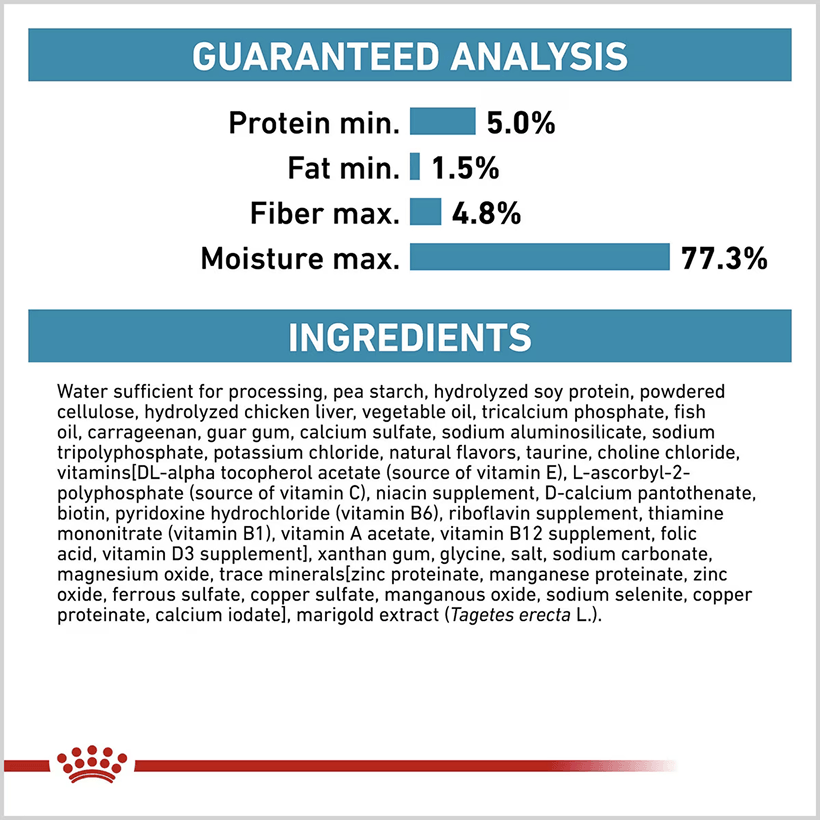
Water sufficient for processing opens the list — standard and expected in a wet therapeutic diet, providing the moisture that supports the high-moisture delivery essential for IBD and sensitive digestive management. Pea starch in second is the isolated starch fraction from peas — functioning as a carbohydrate binder with no intact protein content that could trigger allergic response. Pea starch is chosen over whole peas specifically because the protein fraction has been removed, leaving only the carbohydrate. Hydrolyzed soy protein in third is the formula's primary protein source — soy protein processed to low molecular weight peptides that fall below the immune recognition threshold for most dogs with food protein allergies. The choice of soy rather than chicken reflects a deliberate clinical decision: intact soy protein in dog food frequently triggers reactivity in dogs previously exposed to it, but hydrolyzed soy protein at appropriate molecular weight does not, and soy protein also carries a lower purine content than animal proteins — relevant for dogs prone to urate bladder stones. Powdered cellulose in fourth is concentrated insoluble fiber for intestinal motility support and stool consistency management — particularly important in IBD patients where irregular gut transit is a constant challenge. Hydrolyzed chicken liver provides palatability improvement through hydrolyzed flavoring compounds without intact protein exposure. Vegetable oil provides omega-6 fatty acids. Fish oil delivers EPA and DHA omega-3 fatty acids — important for the anti-inflammatory support that IBD patients specifically benefit from. Carrageenan is the formula's primary gelling agent, creating the loaf texture. Royal Canin has published a response to carrageenan concerns, distinguishing between food-grade carrageenan (used in this formula at regulatory-approved levels) and the degraded poligeenan used in experimental IBD models — a distinction they argue invalidates the association between food-grade carrageenan and intestinal inflammation. Owners managing dogs with severe IBD may wish to discuss this ingredient specifically with their veterinarian. The trace mineral system includes both chelated proteinate forms (zinc proteinate, manganese proteinate, copper proteinate) and inorganic forms, reflecting standard veterinary diet mineral formulation. Marigold extract provides lutein for antioxidant and eye health support.
All figures below are sourced directly from the product label:
The as-fed protein of 5.0% requires dry matter conversion to be contextually meaningful. With moisture at 77.3%, the dry matter content is 22.7%. Converting: protein reaches approximately 22.0% DMB, fat approximately 6.6% DMB, and dietary fiber approximately 21.1% DMB. The fat content of 1.5% as-fed is the lowest of any reviewed dog food formula — intentionally so, as low fat is specifically indicated for dogs with IBD, pancreatitis history, or fat-malabsorption digestive disorders. The elevated fiber — particularly notable in a wet food — reflects the powdered cellulose inclusion for intestinal motility and stool regularity. At 340 kcal per 13.7 oz can, the caloric density is low relative to the can size — a deliberate design for clinical feeding where larger volume at moderate caloric load supports digestive comfort and satiety without excess energy intake.
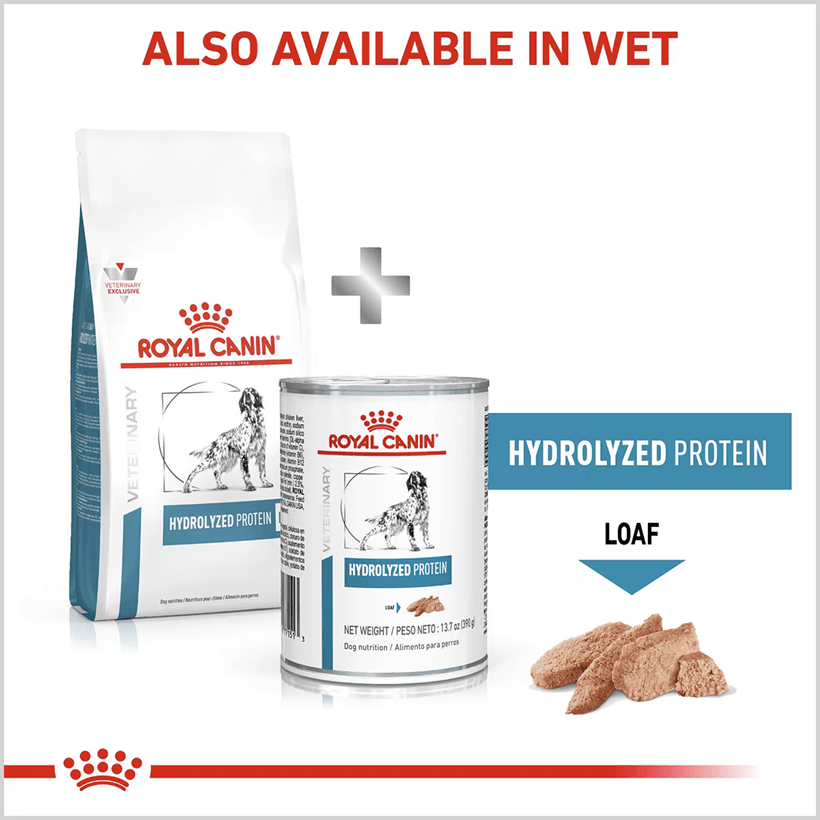
The distinction between this formula and novel protein LID formulas is clinically significant and worth understanding clearly. Novel protein diets — like the Instinct Limited Ingredient Diet Real Rabbit reviewed separately — work by introducing a protein the immune system has never encountered, preventing the allergic cascade before it starts. This approach is effective for mild to moderate food sensitivities and serves as both a diagnostic and therapeutic tool. However, it has an important limitation: if a dog has been sensitized to a very wide range of proteins, finding a truly novel protein becomes increasingly difficult, and cross-reactivity between related species can produce unexpected reactions. Hydrolyzed protein diets bypass this limitation entirely by making the protein structurally unrecognizable to the immune system regardless of its origin. The practical consequence is that hydrolyzed protein diets are more reliable for severe confirmed food allergies and IBD than novel protein diets — and this is why veterinarians prescribe them for dogs that have failed multiple LID alternatives. The wet loaf format also provides higher moisture delivery per serving than dry hydrolyzed formulas, which supports intestinal hydration in dogs with chronic digestive conditions.
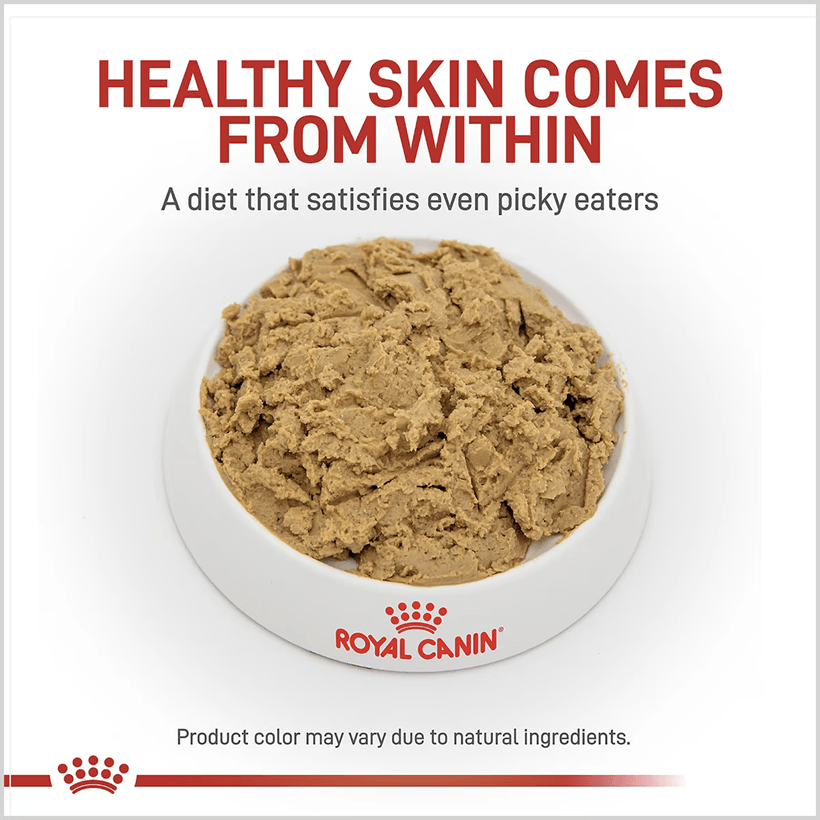
Hydrolyzed protein formulas face a consistent palatability challenge that standard pet foods do not: the hydrolysis process changes the aromatic and flavor profile of the protein. Owner feedback across Chewy consistently describes the dry hydrolyzed protein kibble as difficult for many dogs to accept without a topper or mixer. The wet loaf format addresses this directly — the loaf texture and the hydrolyzed chicken liver palatability enhancement produce meaningfully better acceptance rates than the dry formula alone. Multiple Chewy reviewers describe using 1 to 2 teaspoons of the wet loaf over the dry kibble to achieve eating acceptance in dogs that had been refusing the dry food entirely. A finicky Pekingese owner described shock at finding her dog eating the loaf immediately after dreading the prescription diet — an outcome that appears with sufficient frequency to indicate the wet format is a genuine palatability improvement over the dry alternative for resistant eaters. A minority of dogs refuse both formats or develop worsening symptoms, which veterinarians attribute in some cases to sensitivity to the soy protein even in hydrolyzed form, or to the carrageenan thickener.
Royal Canin Veterinary Diet products are manufactured in Royal Canin-owned USA facilities under the quality control standards of one of the most research-intensive pet nutrition companies operating globally. Royal Canin employs veterinary nutrition specialists and conducts end-to-end quality testing — purchasing raw materials only from trusted long-term suppliers, testing every ingredient shipment for nutritional quality and safety, and conducting 10 separate quality controls during manufacturing before distribution. The Hydrolyzed Protein Loaf has maintained a clean recall record through early 2026. As a prescription product manufactured for a clinical population that cannot tolerate contamination events, the quality control infrastructure is proportionally more rigorous than for standard retail pet food.
The hydrolyzed protein prescription wet dog food market is small and competitive. Hill's Prescription Diet z/d Wet Dog Food is the primary direct competitor — also hydrolyzed, also in a loaf format, and also veterinarian-prescribed. The key difference is the protein source: Hill's z/d uses hydrolyzed chicken protein, while Royal Canin HP uses hydrolyzed soy protein and hydrolyzed chicken liver. For dogs that have developed sensitivity even to hydrolyzed chicken — which occurs in some severely allergic animals — Royal Canin HP's soy protein base offers an alternative pathway. Multiple owner reviews specifically describe switching from Hill's z/d to Royal Canin HP after the z/d formula changed its texture and dogs refused it. Purina Pro Plan Veterinary Diets HA Hydrolyzed uses hydrolyzed soy as well, with a different carbohydrate base and palatability profile. The choice between these three formulas is best made with veterinary guidance based on the dog's specific allergic history and clinical presentation.
Royal Canin Veterinary Diet Hydrolyzed Protein Adult Loaf is appropriate for adult dogs diagnosed by a veterinarian with food protein allergies, food protein intolerance, inflammatory bowel disease, or chronic diarrhea of dietary origin — specifically dogs that have not achieved resolution on novel protein LID diets or whose allergic history is so extensive that novel protein options are limited. It is equally appropriate as a wet food complement to the Royal Canin HP dry kibble, improving palatability and moisture intake in dogs prescribed the dry formula. Several critical warnings apply: this formula must not be used without veterinary prescription and supervision. During the elimination diet period, no other foods, treats, flavored medications, or supplements should be introduced alongside this formula — a single non-hydrolyzed protein exposure can contaminate the diagnostic period. Dogs with confirmed soy sensitivity even to hydrolyzed soy — a small but documented subset — should discuss alternative hydrolyzed protein sources with their veterinarian. The carrageenan presence warrants specific discussion for dogs with severe IBD.
On Chewy, Royal Canin Hydrolyzed Protein Adult Loaf holds ratings of approximately 4.3 out of 5 stars from a verified purchase base composed almost entirely of owners managing diagnosed allergic or IBD dogs under veterinary care. The positive feedback pattern is clinically specific: dogs with years of unresolved itching, chronic ear infections, and recurrent skin flares showing resolution within weeks of transitioning to the hydrolyzed diet; IBD dogs achieving stable digestion after multiple prescription and non-prescription alternatives failed; finicky dogs that refused the dry hydrolyzed formula eating the loaf readily. The critical feedback concentrates on three areas: the per-can cost, which at approximately $5.50 per 13.7 oz can is among the most expensive dog foods available; occasional worsening of symptoms attributed to soy sensitivity in hydrolyzed form or carrageenan reactivity in IBD-severe dogs; and the challenge of sourcing the product reliably when Chewy autoship delays occur for a dog that cannot eat anything else.
Daily feeding recommendations from the official product label, differentiated by ideal weight versus overweight body condition (13.7 oz can):
| Dog Weight | Ideal Weight — Cans/Day | Ideal Weight — Grams/Day | Overweight — Cans/Day | Overweight — Grams/Day |
|---|---|---|---|---|
| 11 lbs (5 kg) | 1 | 415 | 1 | 358 |
| 22 lbs (10 kg) | 1¾ | 697 | 1½ | 602 |
| 44 lbs (20 kg) | 3 | 1,173 | 2½ | 1,013 |
| 66 lbs (30 kg) | 4 | 1,590 | 3½ | 1,373 |
| 88 lbs (40 kg) | 5 | 1,972 | 4¼ | 1,704 |
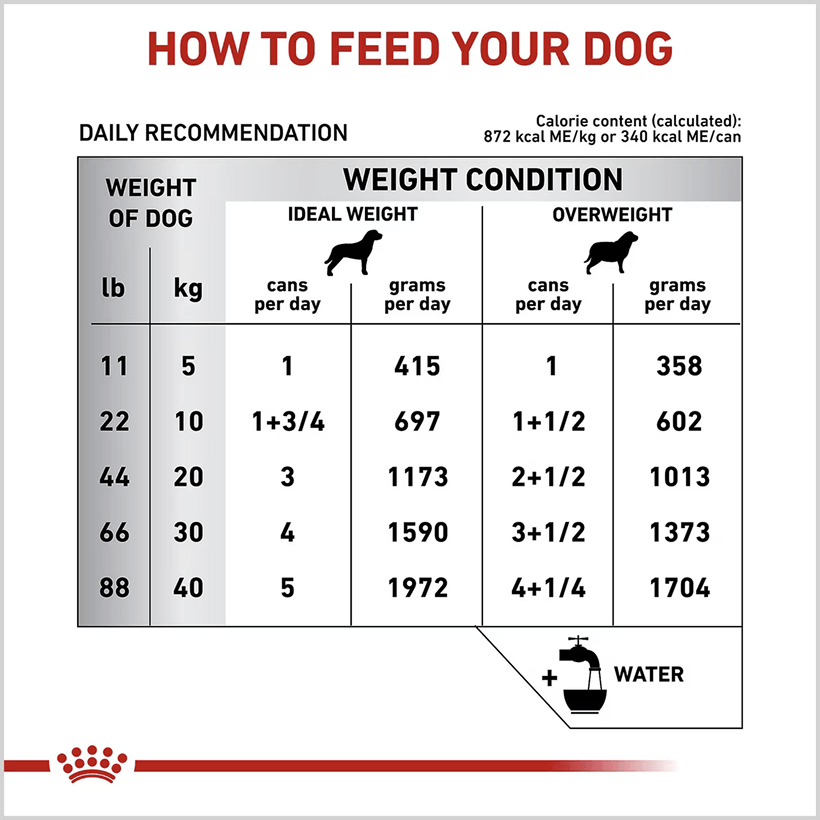
These amounts represent sole diet feeding. When combining with Royal Canin HP dry kibble, reduce the wet food amount proportionally as directed by your veterinarian. Always provide fresh, clean water alongside every meal. Unused portions of opened cans should be covered and refrigerated immediately, used within 5 to 7 days. During the elimination diet diagnostic period, adhere strictly to this formula only — no treats, flavored medications, or any other food.
Royal Canin Veterinary Diet Hydrolyzed Protein Adult Loaf occupies a category that no retail pet food reviewed here enters: a clinically prescribed, research-backed therapeutic diet whose mechanism of action — protein hydrolysis to sub-immunogenic molecular weight — is fundamentally more reliable for confirmed food protein allergies than the novel protein strategy of any LID formula. For the dog whose veterinarian has confirmed food protein allergy or IBD and whose dietary management requires a hydrolyzed wet diet, this is the appropriate product. The cost, the prescription requirement, the carrageenan presence, and the palatability challenge of hydrolyzed protein in general are all real — and all should be discussed with your veterinarian as part of developing the complete dietary management plan. This formula does not replace veterinary care; it is part of it.
Ready to try Royal Canin?
Check Best Price →Some links on this page are affiliate links. We may earn a small commission at no extra cost to you.
Hydrolyzed protein diets break proteins into fragments too small for the immune system to recognize as antigens, bypassing the allergic reaction entirely. Novel protein LID diets avoid proteins the dog has encountered before — a strategy that fails if the dog has been sensitized to many proteins. Hydrolyzed protein is more reliable for confirmed food allergies.
Yes — carrageenan is used as a gelling agent to create the loaf texture. Royal Canin distinguishes between food-grade carrageenan (used here, FDA-approved) and degraded poligeenan (used in IBD experimental models). Owners of dogs with severe IBD should discuss this ingredient with their veterinarian.
Each 13.7 oz can contains 340 kcal ME. A 22 lb dog at ideal weight needs 1¾ cans per day as a sole diet. The low caloric density supports larger feeding volumes at moderate caloric intake, beneficial for digestive comfort.
No — this is a Veterinary Diet product that requires a valid veterinary prescription to purchase. It is formulated for specific diagnosed conditions and should only be used under veterinary supervision.
Hydrolyzed soy protein is used because soy has lower purine content than animal proteins, reducing bladder stone risk in susceptible breeds, and because the hydrolysis process breaks soy protein below immune recognition threshold regardless of prior soy sensitivity.