| 🥩 Food Type | Dry Food |
| 📅 Life Stage | Adult |
| 💪 Health Needs | Weight Management|Joint Support |
| 📏 Breed Size | Large Breed |
| 🏷️ Brand | Blue Buffalo |
| ⭐ Our Rating | 4.6 / 5 |
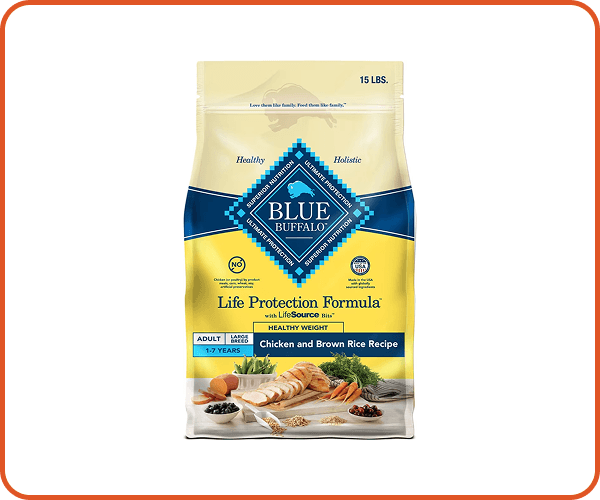
This Blue Buffalo Life Protection Healthy Weight Large Breed Chicken & Brown Rice review needs to start with a direct comparison, because "healthy weight" means nothing without context. Blue Buffalo's standard Life Protection Large Breed Adult formula delivers 24% protein and 14% fat. This Healthy Weight variant delivers 20% protein and 9% fat — a 30% reduction in fat and a 17% reduction in protein. Caloric density drops from roughly 370 kcal per cup to 331 kcal per cup. That is the entire product in three sentences: same ingredient philosophy, meaningfully less energy, and a fiber content cranked up to 10% to keep large dogs feeling full on fewer calories.
Whether those trade-offs produce healthy weight loss or just hungry dogs with less muscle depends on the individual dog, the owner's discipline with portions, and whether this formula is genuinely what a particular overweight large breed needs — or whether a veterinary weight-loss diet would be more appropriate. That distinction matters more than most buyers realize, and this review will address it directly.
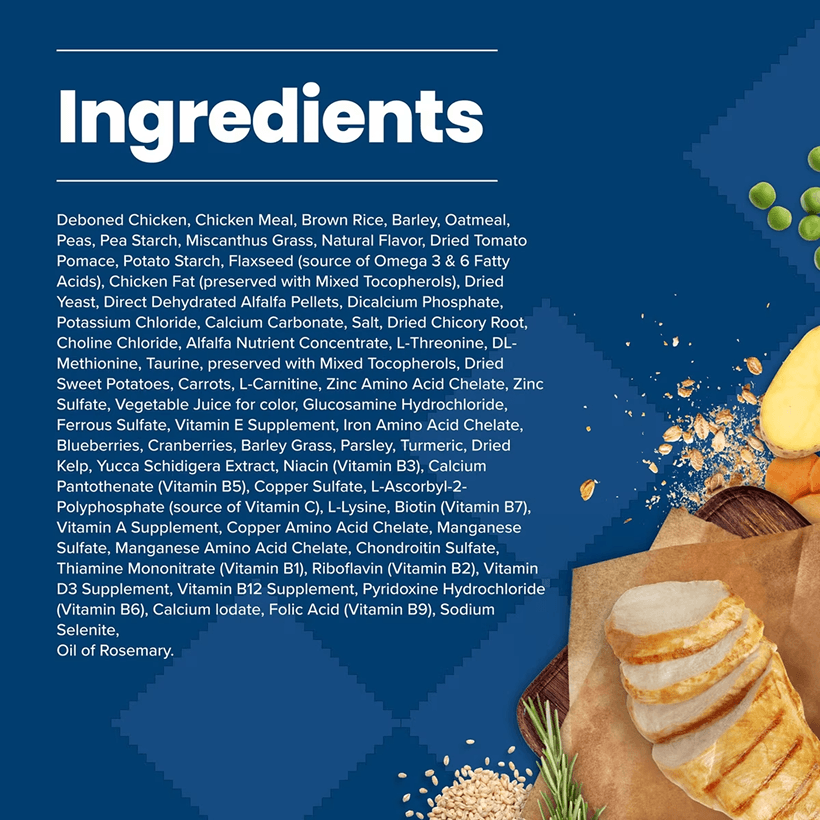
Deboned chicken and chicken meal hold the first two positions, identical to the standard formula. The animal protein foundation is the same. But from position three onward, the Healthy Weight version diverges significantly. Brown rice, barley, and oatmeal provide complex carbohydrate energy — grain-inclusive, no corn, wheat, or soy — followed by peas and pea starch for additional fiber and plant protein.
Then comes the ingredient most owners will not recognize: miscanthus grass. This is a tall perennial grass added as an insoluble fiber source to increase bulk without adding digestible calories. It is relatively new in pet food formulation and serves a single purpose — making the dog feel physically fuller while consuming fewer calories. Combined with the 10% maximum fiber from the guaranteed analysis, this formula is aggressively engineered around satiety. Potato starch also appears, adding another starch source that the standard formula does not include.
Chicken fat drops noticeably down the ingredient list compared to the standard formula — appearing after dried tomato pomace, flaxseed, and dried yeast rather than in its usual sixth or seventh position. This demotion reflects the 30% fat reduction directly: less chicken fat means less caloric density, less palatability enhancement, and a drier-tasting kibble that some dogs find less appealing than the richer standard formula.

The large-breed-specific functional additions are where the formula earns its "Large Breed" designation beyond just bag marketing. L-carnitine at 100 mg/kg supports fat metabolism — helping the body convert stored fat into energy rather than relying solely on caloric restriction. Glucosamine at 400 mg/kg and chondroitin sulfate at 300 mg/kg provide joint support that overweight large dogs desperately need: excess weight accelerates joint degradation, and maintaining mobility during a weight-loss period is critical for enabling the exercise that makes caloric restriction sustainable. Taurine and DL-methionine round out the amino acid supplementation.
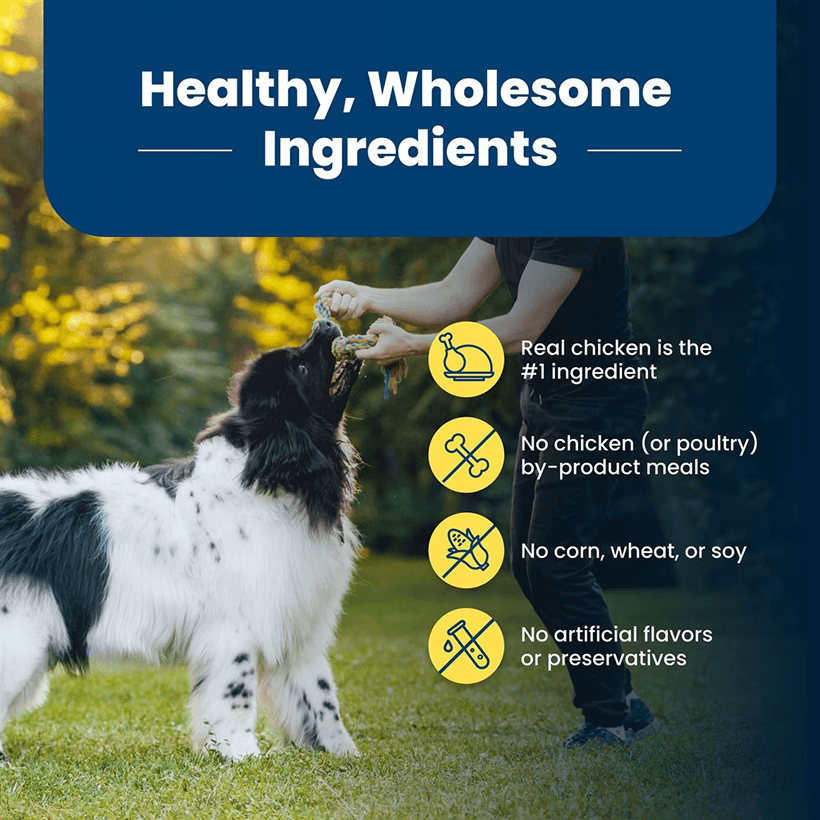
The exclusion profile remains standard Blue Buffalo: no by-product meals, no corn, wheat, or soy, no artificial flavors or preservatives. The formula is manufactured in the United States. Blue Buffalo's recall history and the 2015 by-product meal lawsuit apply to the brand broadly and are covered in detail in our Blue Buffalo Life Protection Small Breed Chicken & Brown Rice review.
The guaranteed analysis:
Dry matter basis with 10% moisture:
Here is the tension at the center of this formula. When a dog loses weight, the goal is to lose fat while preserving lean muscle mass. Higher protein during caloric restriction helps protect muscle — most veterinary weight-loss diets deliver 30–40% DMB protein specifically for this reason. At 22.2% DMB protein, this formula sits below the AAFCO minimum of 18% but well below what nutritional science suggests is optimal for weight loss in dogs. The protein is adequate for maintenance — a dog that is already at a healthy weight will not suffer — but for a dog actively losing weight, the risk of losing muscle alongside fat increases at this protein level.
The 11.1% DMB fiber is exceptionally high and is the formula's primary satiety mechanism. For reference, standard adult kibbles typically deliver 3–5% DMB fiber. That additional bulk helps dogs feel full, but it also means more stool volume and potentially softer stools during transition — a trade-off that large-breed owners managing 80+ lb dogs in apartment settings will feel acutely. The estimated carbohydrate content at 48–52% is the highest of any formula we have reviewed — driven by the three grains, two starch sources, and miscanthus grass. For dogs with any degree of insulin resistance, this carbohydrate load deserves discussion with a veterinarian.
This formula occupies a specific and often misunderstood niche. It is not a veterinary weight-loss diet. Products like Hill's Prescription Diet Metabolic, Royal Canin Satiety Weight Management, and Purina Pro Plan Veterinary OM require veterinary authorization and are formulated with significantly higher protein (often 35–45% DMB), clinically validated satiety blends, and specific nutrient ratios proven through feeding trials to produce fat loss while preserving muscle. They cost more, require a vet visit, and deliver measurably different outcomes for clinically obese dogs.
Blue Buffalo Healthy Weight Large Breed is an over-the-counter maintenance diet with reduced calories. It is designed for large-breed dogs that are slightly overweight, trending toward weight gain, or whose owners want to proactively prevent obesity in breeds predisposed to it — Labrador Retrievers, Golden Retrievers, Beagles, Rottweilers, and similar breeds that gain weight easily. For a 90-lb Lab that should be 75 lbs, this formula can help — especially combined with portion control, measured meals, and increased exercise. For a 120-lb dog that should be 80 lbs, this is not enough. That dog needs veterinary intervention, bloodwork to rule out hypothyroidism or Cushing's disease, and a prescription weight-loss protocol.
Understanding this boundary prevents both disappointment and harm. Owners who expect dramatic weight loss from a food swap alone — without calorie counting, treat elimination, and exercise increases — will be disappointed regardless of which food they choose.
The Large Breed Healthy Weight variant holds a 4.6 out of 5 rating on Chewy from approximately 770 reviews. The feedback separates cleanly into two populations: dogs that were moderately overweight and responded well, and dogs with more serious weight issues where results were limited.
The positive cluster is dominated by Labrador and Golden Retriever owners. Gradual weight loss over 2–3 months with improved energy and mobility is the most common success story. One owner described her 12-year-old Lab maintaining healthy weight and joint function on this formula for over a decade — the kind of long-term prevention story that represents the product's ideal use case. Coat quality improvements appear frequently, attributed to the flaxseed-sourced omega fatty acids. Multiple owners praise the joint support combination, reporting that their large dogs move more freely after several months on the formula.
The negative cluster reveals the formula's limitations. Some dogs refuse or lose interest in the food — the reduced chicken fat makes it less aromatic and palatable than the standard formula, and picky large breeds notice the difference. Owners of dogs needing significant weight loss report modest or no results, often because they did not adjust portions downward aggressively enough or continued feeding treats alongside the kibble. The LifeSource Bits rejection issue persists here as in all Blue Buffalo dry formulas — some dogs eat around the dark bits, missing the concentrated nutrient package. And a recurring quality control complaint involves bags arriving with broken seals or insufficient quantities of LifeSource Bits relative to what packaging imagery suggests.
Blue Buffalo provides separate columns for weight reduction and weight maintenance. The formula meets AAFCO Dog Food Nutrient Profiles for maintenance of adult dogs.
| Dog Weight (lbs) | Weight Reduction (cups/day) | Weight Maintenance (cups/day) |
|---|---|---|
| 41 – 60 | 2¼ – 3 | 3 – 4 |
| 61 – 80 | 3 – 3¾ | 4 – 5 |
| 81 – 100 | 3¾ – 4½ | 5 – 6 |
| Over 100 | 4½ + ½ per additional 20 lbs | 6 + ½ per additional 20 lbs |
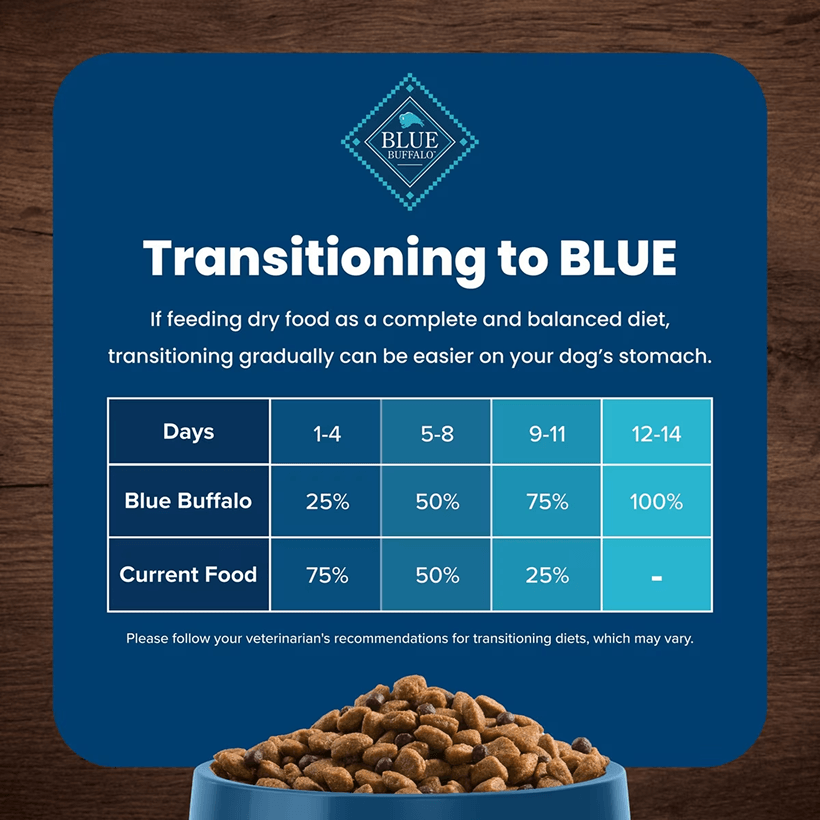
The critical detail most owners miss: feed for the target weight, not the current weight. An 85-lb dog that should weigh 70 lbs should be fed at the 61–80 lb weight reduction level, not the 81–100 lb level. This single adjustment determines whether the formula produces results or maintains the existing overweight condition. Blue Buffalo recommends a 14-day transition — days 1–4 at 25% new food, days 5–8 at 50%, days 9–11 at 75%, and days 12–14 at 100%. The high fiber content makes gradual transition particularly important; jumping straight to 11% DMB fiber from a standard 4% formula will cause digestive upset in most dogs.
Eliminate or strictly account for all treats, table scraps, and dental chews during weight loss. A single large milkbone contains roughly 115 calories — at 331 kcal per cup, that treat undoes more than a third of a cup of this food. Weigh your dog monthly and adjust portions if weight is not trending downward after 4–6 weeks.
Blue Buffalo Life Protection Healthy Weight Large Breed Chicken & Brown Rice is most honestly described as an obesity prevention diet with joint support for large breeds rather than a weight-loss diet. The 30% fat reduction, L-carnitine for fat metabolism, high fiber for satiety, and 331 kcal per cup combine to create a formula that helps large dogs maintain a healthy weight or lose modest amounts over extended periods. The glucosamine and chondroitin provide joint support that every overweight large dog needs, and the grain-inclusive approach avoids the DCM conversation entirely. No by-products, no corn, wheat, or soy, no artificial additives — the standard Blue Buffalo exclusion profile that millions of owners trust.
The honest limitation is the protein-to-carbohydrate ratio. At 22% protein and 50% carbohydrates on a dry matter basis, this formula asks overweight dogs to lose weight on a macronutrient profile that nutritional science would not design for that purpose. Dogs that are mildly overweight and need caloric moderation will do well. Dogs that are clinically obese need higher protein, veterinary supervision, and a more aggressive nutritional intervention than any over-the-counter food can responsibly deliver. Knowing which category your dog falls into — and being honest about it — is the first step toward choosing the right tool for the job.
Ready to try Blue Buffalo?
Check Best Price →Some links on this page are affiliate links. We may earn a small commission at no extra cost to you.
The Healthy Weight version reduces fat by 30% (from 14% to 9%), lowers protein from 24% to 20%, increases fiber from 6% to 10%, and adds L-carnitine at 100 mg/kg for fat metabolism. Caloric density drops from approximately 370 kcal to 331 kcal per cup. Glucosamine and chondroitin levels remain the same.
Feed for the target weight, not the current weight. An 85-lb dog that should weigh 70 lbs should receive portions from the 61–80 lb weight reduction column. Feeding at the current weight maintains the overweight condition rather than reducing it.
Miscanthus grass is a tall perennial grass added as an insoluble fiber source. It increases physical bulk in the food without adding digestible calories, helping dogs feel fuller while consuming fewer calories. It is a relatively recent addition to pet food formulations.
For dogs that are mildly overweight, this formula combined with portion control and exercise can produce gradual results over months. For clinically obese dogs — those more than 20% above ideal weight — a veterinary weight-loss diet with higher protein and clinical supervision is more appropriate and more likely to succeed.
Yes. The cold-formed antioxidant and vitamin bits are included in all Blue Buffalo dry formulas. Some dogs pick around them, which means they miss the concentrated nutrient package those bits deliver.